buying real estate in Syria: Introduction
This article explains buying real estate in Syria. A property purchase is not legally safe merely because the seller has keys, neighbours recognize the seller, a broker presents an old contract, or the parties sign a document and exchange money. Syrian real-estate transactions require a careful distinction between possession, a contractual right to demand transfer and registered ownership.
That distinction matters more in 2026. Property records, powers of attorney and chains of title may reflect years of displacement, inheritance, informal dealing, damaged buildings or disputed possession. Transfer services resumed in cadastral directorates in August 2025 after a period of suspension, while tax and clearance procedures also changed during 2025.[5][6] A buyer should therefore verify both the enduring legal rules and the administrative procedure actually applied to the property on the closing date.
This guide explains the due-diligence questions that should be answered before paying a deposit, the clauses a Syrian real-estate sale contract should address, the registration sequence, and the extra controls needed for representatives and non-Syrian buyers. It is not a substitute for examining the original file at the competent registry.
Quick answer
For registered real estate, Article 825 of the Syrian Civil Code states that real rights are acquired and transferred through registration in the Land Registry.[1] A private sale contract can create enforceable obligations between the parties, but it does not give the buyer the same position as completed registration. Before paying a material amount, the buyer should obtain a recent official property extract, identify every owner and share, review annotations and encumbrances, verify the seller's identity and authority, compare the physical property with the registry and planning records, confirm possession and occupancy, calculate current taxes and fees, and make payment conditional on a registrable transfer.
Why real-estate due diligence matters in Syria in 2026
The Land Registry is designed to publicize the legal condition of a property: its description, registered rights, burdens and relevant transactions. The Syrian Arab Encyclopedia explains that the registry includes the ownership register, daily journal, delimitation records, survey maps and supporting documents.[2] A buyer who reviews only one paper may therefore miss an entry or inconsistency elsewhere in the official file.
Recent Syrian housing, land and property reporting also documents forged identity papers, powers of attorney and title documents used in purported sales, as well as disputes involving absent owners and coerced transactions.[9][10] These examples do not mean that every old or representative-led transaction is invalid. They show why identity, authority, consent and the full chain of title must be verified rather than assumed.
Due diligence is not simply an exercise for the buyer. A seller benefits from confirming the file before marketing the property, because a missing inheritance transfer, unresolved attachment, building violation or expired authority can prevent closing after the parties have agreed a price.
What actually transfers ownership under Syrian law?
Registered real estate and Article 825
Article 825 of Legislative Decree No. 84 of 1949 provides the central rule: real rights in immovable property are acquired and transferred by registration in the Land Registry.[1] Decision No. 188 of 1926 and its implementing framework organize the cadastral system and the legal effect of entries.[2]
For a buyer, this means that the closing objective is not just a signed contract. It is a registrable transaction that results in the buyer being entered as owner of the correct property or share, subject only to the rights and burdens the buyer has accepted.
What does a private sale contract achieve before registration?
A properly formed sale contract can create personal obligations. The seller may be required to complete transfer, and the buyer may have contractual claims if the seller breaches. However, the contract should not be described as though it has already produced registered title.
The distinction affects risk. Before registration, another annotation, attachment, death, capacity issue, competing disposition or dispute may complicate performance. Payment terms and remedies should therefore be linked to objective transfer milestones, not only to signature.
First identify the applicable record system
Not every property is evidenced by the same document. A conventional Land Registry title, a provisional registry entry, a housing-cooperative allocation, an unpartitioned share, an informal-area record and a final court judgment are not interchangeable.
The first due-diligence question is: Which authority and record legally govern this exact property? The answer determines which documents must be reviewed, who must approve the transfer and whether additional regularization or litigation is required.
| Record or evidence | What it may show | What the buyer must verify |
|---|---|---|
| Official property extract | Property number, cadastral zone, owner, shares and recorded annotations | Date of issue, issuing authority, full page of entries and consistency with supporting records |
| Cadastral plan and delimitation documents | Boundaries, location, area and survey identity | Physical match, encroachments, subdivisions and any pending survey issue |
| Provisional or special register | Rights recorded outside the final ownership register | Legal effect of the entry, competent authority and route to final transfer |
| Court judgment or inheritance document | A legal basis for registration or a change in owners | Finality, service, enforceability, affected shares and actual execution in the registry |
| Power of attorney | A representative's authority to contract or register | Authenticity, scope, validity, revocation status and identity of principal and agent |
The buyer's legal due diligence
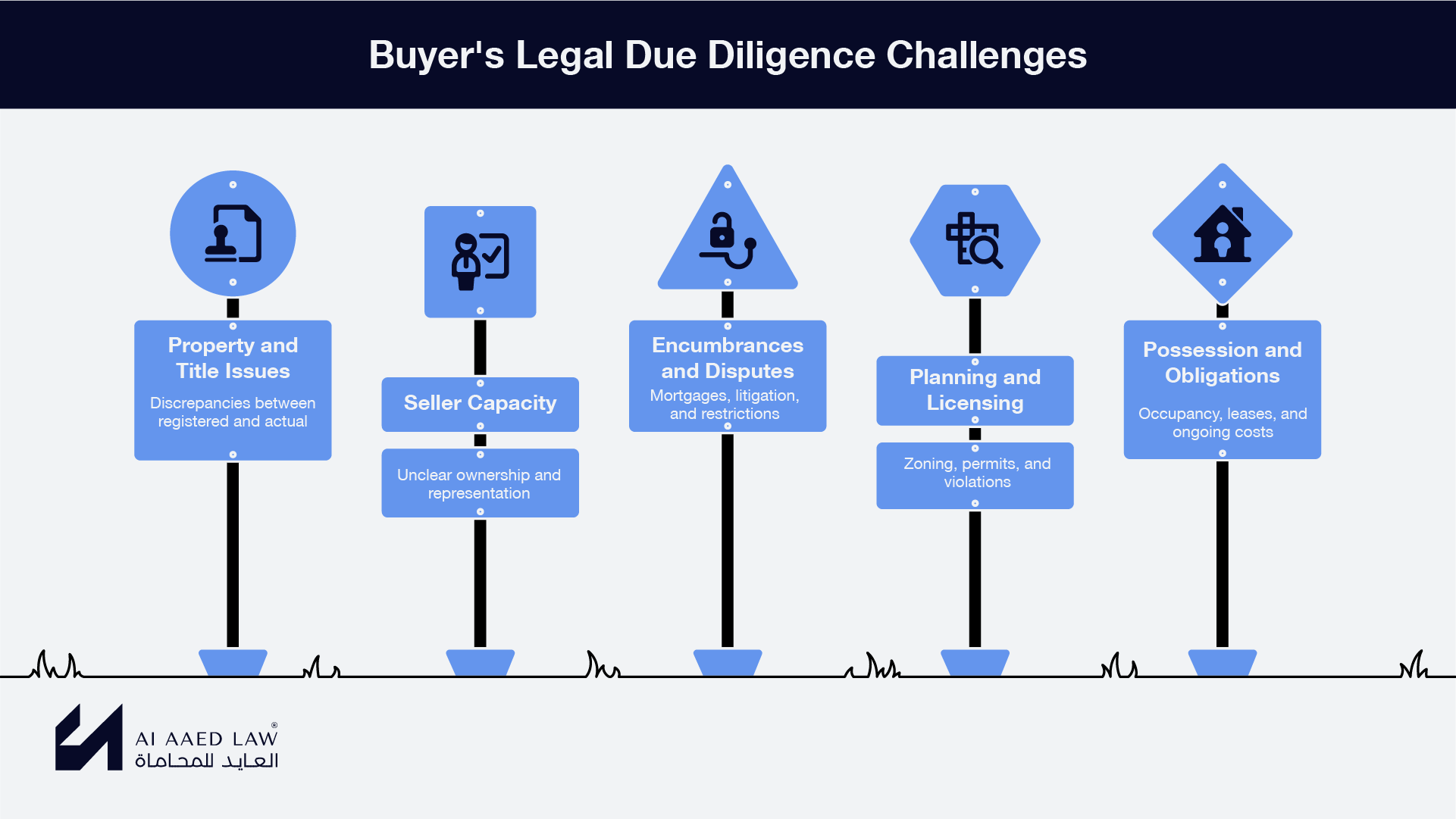
Verify the exact property and registered title
Obtain a recent official extract directly from the competent authority or through an independently instructed lawyer. Confirm the property number, cadastral zone, type, area, legal category, floor or unit, common shares and all owners. The address used by residents or brokers is not a substitute for the cadastral identity.
Compare the extract with the cadastral plan, seller's document, prior transfer instruments and the property itself. An apartment, shop, parking place, roof space, garden or storage area shown during inspection may not form part of the registered unit.
Verify the seller, capacity and authority
Match the registered owner's name and identifying information with current civil documents. If an owner has died, determine whether the inheritance has been established and whether all affected shares can be transferred. If the owner is a minor, lacks capacity, is married under a regime affecting the asset, or acts through a guardian, company or estate, identify the approvals and representatives required.
For a corporate seller, review the commercial registration, constitutional documents, signatory authority, board or shareholder approvals and any restrictions affecting disposal of a material asset. A company stamp or employee's signature is not enough by itself.
Review annotations, encumbrances and disputes
The file should be checked for mortgages, attachments, provisional registrations, litigation notices, usufruct, easements, long leases, expropriation or planning measures, restrictions on disposal and other registered rights. The lawyer should also search for material proceedings or enforcement steps that may not be obvious from the paper provided by the seller.
An annotation is not automatically fatal to the purchase, but it must be understood. The contract should state whether it will be discharged before closing, released simultaneously against payment, or accepted by the buyer with an agreed price adjustment.
Test planning, licensing and physical status
Confirm the property's planning classification, permitted use, building licence, subdivision or floor-allocation status and any recorded violation, demolition, expropriation, acquisition or regularization issue. A physically complete unit may still have a licensing or partition problem that prevents an independent transfer.
Use a qualified engineer or surveyor where the area, boundaries, structural condition, damage, additions or common parts are material. Legal due diligence does not replace technical inspection.
Check possession, occupancy and ongoing obligations
Inspect who occupies the property and on what basis. Review leases, occupancy claims, caretaker arrangements and evidence of handover. Confirm whether the property can be delivered vacant if that is the bargain.
Request current statements for utilities, municipal charges, building-management obligations and other property-linked amounts where applicable. The sale contract should allocate arrears and specify the readings, keys, documents and condition required at handover.
Documents to request before paying a deposit
The exact list depends on the property, but a buyer will commonly require:
A recent official property extract showing all current entries.
The cadastral plan, survey information and official property description.
The seller's current identity and civil-status documents.
The seller's original title or the legal instrument forming the chain of title.
Inheritance documents and registered transfers for any deceased owner.
Every power of attorney, guardianship decision or corporate authorization relied upon.
Building, subdivision, occupancy and use licences applicable to the unit.
Documents concerning mortgages, attachments, disputes, leases or other rights.
Tax and financial-clearance documents required for transfer.
Utility, municipal and building-management statements, where relevant.
A written explanation of any difference between the registry, plan and physical property.
For a non-Syrian buyer, evidence that the buyer and intended property satisfy the applicable ownership and approval rules.
Copies supplied by the seller or broker should be compared with official records. A deposit should not become non-refundable merely because basic title documents were delivered late or proved inaccurate.
Drafting the real-estate sale contract
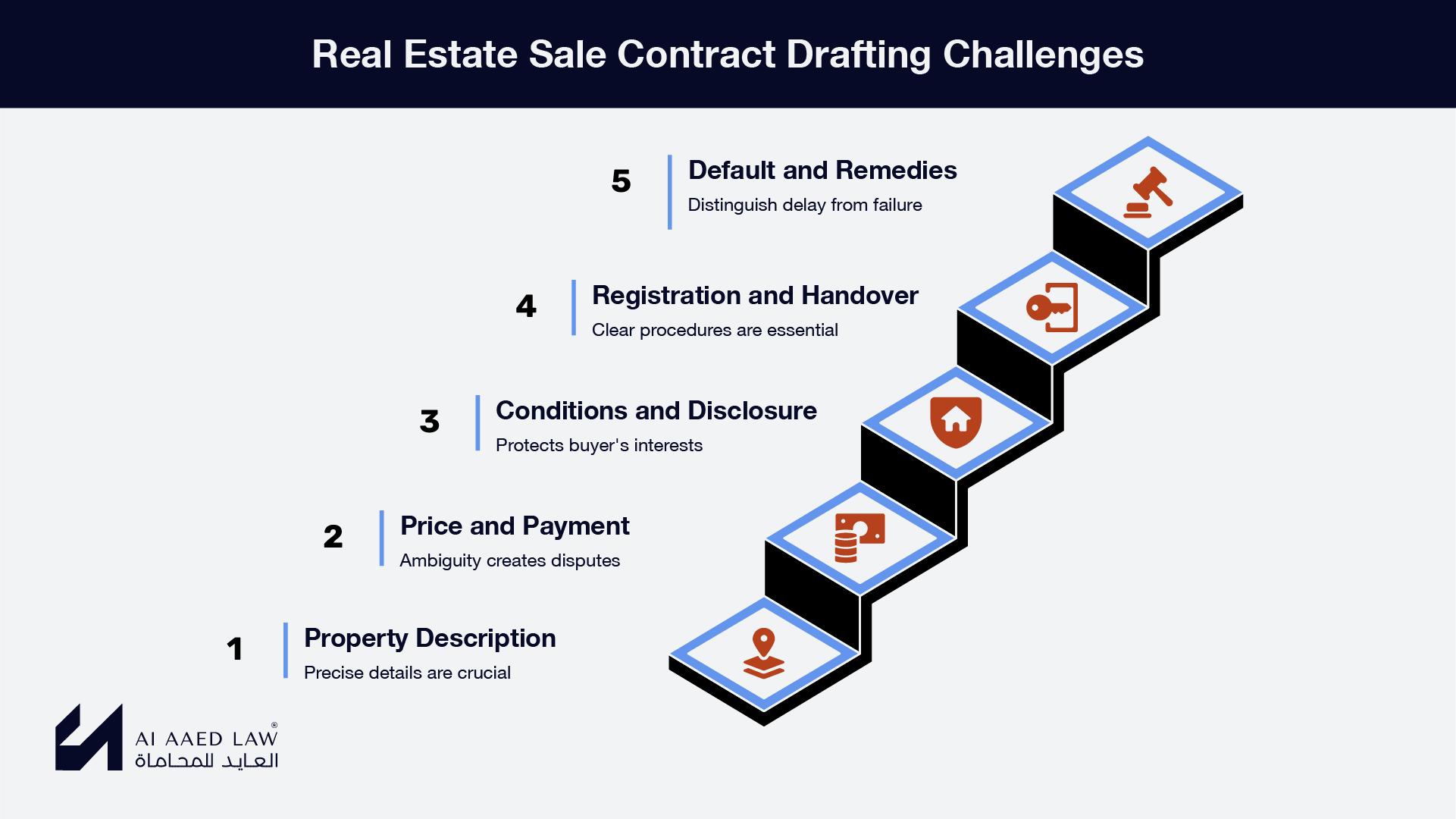
Property and title description
Identify the parties precisely and reproduce the property's cadastral details, registered share, legal type, location, floor, common parts and included appurtenances. Describe the seller's source of title and list the documents examined. If the bargain includes furniture, equipment, parking or another asset, separate it clearly from the registered real estate.
Price, payment and deposit
State the price, currency, lawful payment method, instalments, evidence of receipt and the event that releases each payment. Avoid leaving a large balance dependent only on a promise to attend the registry later.
The contract must explain what a deposit or earnest-money payment means. Is it part payment confirming a binding sale, security for performance, or an agreed right to withdraw on stated financial consequences? Ambiguous use of the word “deposit” can create a dispute about whether either party may walk away.
Conditions, representations and disclosure
Make closing conditional on the matters that genuinely protect the buyer: satisfactory title, absence or release of specified burdens, current authority, required clearance and approvals, registrability of the unit, and delivery of agreed documents.
Seller representations should address ownership, authority, prior disposals, litigation, attachments, leases, occupants, compulsory acquisition, building violations, taxes, utilities and material damage. The contract should require prompt notice if a representation becomes inaccurate before registration.
Registration, handover, default and remedies
Specify the registry, target date, attendance obligations, allocation of taxes and fees, documents each party must provide, and how postponement is handled. Define when possession, risk, rent, utilities, keys and original documents pass.
Default clauses should distinguish delay from a fundamental failure to transfer. They may address notice, cure, specific performance, termination, repayment, agreed compensation where lawful and responsibility for third-party claims. Choose the competent court or another valid dispute mechanism deliberately; do not copy an arbitration clause from an unrelated commercial contract without assessing cost, urgency and registrability.
Registration and ownership-transfer process
A practical sequence
Although the exact forms and approvals vary, a conventional registered sale will generally follow this sequence:
Identify the competent cadastral office and obtain the current official file.
Complete legal and technical due diligence before committing the full price.
Agree and sign a contract that allocates pre-closing responsibilities and risk.
Obtain the financial clearance, no-objection document and any other current approvals required for the property or parties.
Prepare identity, authority, tax, title and technical documents in the form required by the registry.
Attend through the parties or duly authorized representatives and execute the registrable transaction.
Pay the assessed taxes and registration fees through the authorized channels.
Confirm that the buyer is entered in the register and obtain an updated official extract.
Complete physical handover and record keys, meters, documents and property condition.
Do not treat submission of an application as proof that title has transferred. The buyer should verify the completed entry.
What changed operationally in 2025?
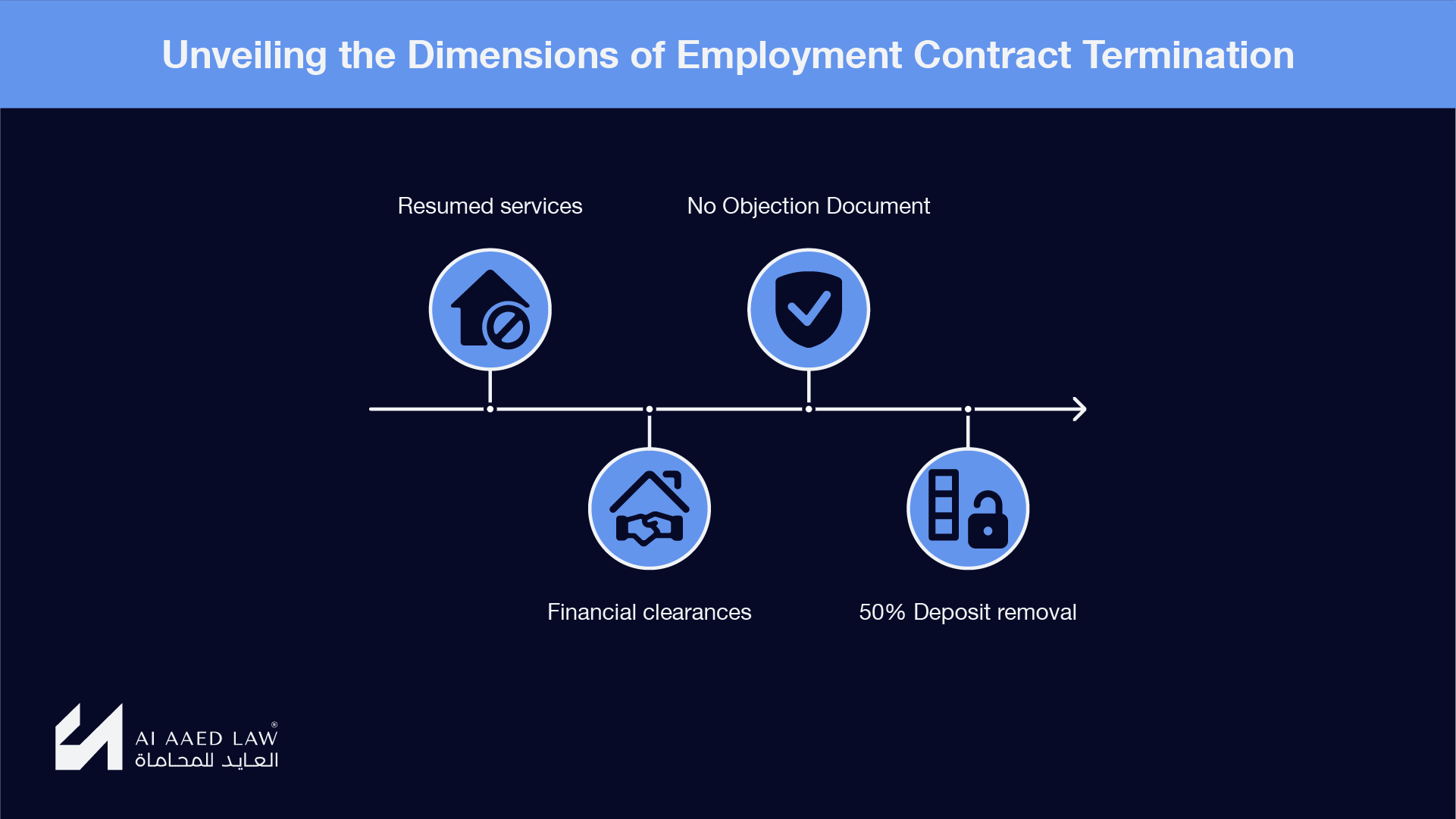
After transfers and financial-clearance issuance had been suspended following December 2024, the authorities resumed real-estate transfer services during 2025.[5][6] Ministry of Finance Circular No. 135 of 30 July 2025 addressed the resumed issuance of financial clearances, replaced the former prior security-approval route with a “No Objection to Complete the Real Estate Transaction” document, and removed the mandatory deposit of 50% of the sale value for voluntary sales.[5]
These are operational developments, not a reason to omit due diligence. Forms, validity periods and coordination among finance, interior and cadastral authorities should be confirmed for the relevant governorate and transaction immediately before closing.
Taxes and registration fees
The statutory framework
Law No. 15 of 2021 regulates real-estate sales tax, while Law No. 17 of 2021 regulates fees for registering real-estate transactions.[7] The tax treatment depends on the type and location of the property, the legal event and the assessment basis in force.
July 2025 public reform announcements described a move toward simplified, consolidated charges and greater reliance on the declared contract value.[4] Later operating guidance reported for Circular No. 135 retained a prevailing-value method in defined cases, while reducing the adopted residential value and using the contract value where no official value had been set.[5] These sources should not be collapsed into a single universal percentage.
Obtain a current written calculation
Before signing an unconditional contract, obtain a transaction-specific written estimate from the competent finance and registry channels. The contract should state who bears sales tax, registration fees, clearance costs, professional fees, past liabilities and any reassessment or penalty caused by inaccurate information.
Do not understate the price or use side agreements. Apart from tax risk, inconsistent documents weaken the evidentiary record of the transaction and can complicate repayment or damages if the transfer fails.
Powers of attorney and buyers acting from abroad
Form and authentication
A buyer or seller outside Syria may need a special power of attorney. The document should identify the principal, agent, property or permitted category of property, price and payment powers, authority to sign, register, receive or deliver documents, and any power to delegate.
Execution, consular legalization, certification, translation and local acceptance must be confirmed for the place where the power is issued and the authority that will use it. Do not assume a broad general power or a foreign notarization will be accepted without further formalities.
Fraud controls
Verify the power with the issuing authority and confirm that it remains valid and unrevoked. Independently contact the principal using reliable details, compare identity documents, review the timing and scope of the authority, and avoid paying the agent unless the power clearly authorizes receipt and the payment trail is documented.
These controls are particularly important because recent Syrian reporting has identified forged powers of attorney and identity documents in disputed property transfers.[9][10]
Rules for non-Syrian buyers
Ownership is subject to a separate approval framework
Ownership by non-Syrian natural and legal persons is regulated by Law No. 11 of 2011 as amended, including Law No. 12 of 2021, together with implementing decisions and other applicable rules.[3] The framework addresses matters such as lawful residence, prior authorization and the nature and number of residential properties that may be acquired. Diplomatic, inheritance, investment and other situations may follow additional or different rules.
A non-Syrian buyer should obtain a written eligibility analysis before paying a reservation fee or deposit. Nationality, residence, legal form, intended use, property location, licensing status and current administrative practice can all affect the answer.
A company or investment project is not an automatic shortcut
Forming a Syrian company does not by itself guarantee that it may acquire any property. The company's objects, ownership, investment approvals, sector rules, land classification and the connection between the property and the licensed project must be reviewed. Investment Law No. 18 of 2021 was amended by Decree No. 114 of 2025, so project-based rights should be checked against the current investment approval and implementing framework.[8]
Using a nominee or concealed side arrangement to avoid ownership limits can create title, corporate, tax and criminal risk. The legal structure should reflect the genuine investor, funding and use.
Special property situations
Inherited or jointly owned property
Confirm every owner's share and whether the inheritance is registered. One co-owner cannot transfer the others' shares without valid authority. Review pre-emption, partition and possession issues before assuming that purchase of an undivided share will give exclusive control of a particular room, floor or land parcel.
Provisional, cooperative and informal records
Some rights may appear in a provisional register, housing-cooperative records, municipal files, court documents or informal instruments rather than a final green title. The buyer must understand the legal effect of that record and the route, cost and uncertainty of reaching final registration.
Do not market a weaker record as though it were equivalent to final Land Registry title. Price and payment protections should reflect the actual legal status.
Occupied, damaged or reconstruction-affected property
Where a property is occupied, damaged, demolished, in an informal settlement or affected by a new plan, due diligence should expand to possession evidence, tenant or occupant rights, structural assessment, planning decisions, demolition and reconstruction rules, compensation or alternative-housing claims and the practical ability to deliver the asset.
An official title remains important, but title alone does not answer whether the buyer can lawfully and practically use the property as intended.
Common warning signs
The seller refuses to provide a recent official extract or insists that an old contract is sufficient.
The property shown does not match the cadastral number, plan, floor, area or registered share.
The seller relies on a copy of a power of attorney that cannot be verified with the issuing authority.
One heir, spouse, co-owner or company representative speaks for others without documented authority.
The buyer is asked to pay most of the price before clearance, release of burdens or registry attendance.
The contract omits occupants, leases, building violations, mortgages, attachments or pending disputes.
The declared price differs from side receipts or the amount actually paid.
A broker promises that a foreign-ownership restriction, planning issue or annotation can be ignored after payment.
The parties are told that a court case is the normal substitute for a registrable transfer without an explanation of the legal and procedural risk.
Urgency is used to prevent independent verification of identity, title or authority.
Buyer checklist before signing
Identify the exact cadastral property and the record system governing it.
Obtain a recent official extract and full annotation review.
Match the seller and every registered share to verified identity and authority documents.
Trace inheritance, judgments, companies and powers of attorney through the full title chain.
Compare the registry and survey record with the physical property.
Review planning, licensing, use, subdivision, violation and acquisition status.
Confirm possession, leases, occupants and the ability to deliver vacant possession if required.
Obtain a current tax, fee, clearance and approval roadmap.
Make material payments conditional on objective, documentable milestones.
Use a property-specific bilingual contract where parties rely on different languages.
Closing checklist
Recheck the property extract and authority documents close to the transfer date.
Confirm that agreed mortgages, attachments or other burdens are released or handled simultaneously.
Confirm the validity of the financial clearance, no-objection document and special approvals.
Reconcile the final price, payment evidence, taxes, fees and any retained amount.
Ensure that all required owners, spouses, guardians, company signatories or representatives attend or are validly represented.
Execute the correct registrable instrument before the competent authority.
Verify the completed buyer entry and obtain an updated official extract.
Sign a handover record covering possession, keys, meters, documents, condition and outstanding items.
What if the seller refuses or cannot complete registration?
The response depends on the contract, property record, reason for failure and competing rights. Possible claims may include performance, registration based on a final judgment where legally available, termination, restitution, damages or protective annotations. Urgent measures may be needed if the property could be transferred, attached or altered.
Do not delay after a refusal or discovery of a competing claim. Limitation, evidence, priority and registry steps can affect the buyer's position. Preserve the contract, payment proof, messages, identity documents, registry extracts and all evidence of possession or promises.
Legal notice
This article provides general information on the Syrian legal framework as reviewed on 8 September 2026. It is not legal advice and does not cover every record system, governorate practice, tax treatment, planning measure, foreign-ownership rule, sanctions issue or factual situation. Laws, circulars and administrative practice may change. The transaction file and current requirements of the competent authorities must be reviewed by licensed Syrian counsel before signing or payment.
Official source: Syrian Ministry of Justice