A partnership agreement is more than a document confirming that two or more people have agreed to pursue a business venture together. Its real value becomes clear when money starts coming in, expenses arise, partners’ circumstances change, or disagreements emerge over management or profits. A well-drafted agreement should therefore explain how the partnership will operate rather than simply list the partners and their respective ownership interests.
In Syria, a partnership agreement requires careful drafting that reflects the nature of the business. It also drafts the legal capacity of the partners, capital contributions, management responsibilities, profit and loss distribution, and mechanisms for exiting the venture. This guide explains the practical provisions that can help prevent disputes before they arise. However, it does not replace legal advice tailored to the circumstances of a particular business.
Summary of key points
| Topic | Key point |
|---|---|
| Partnership Agreements and Their Role in Business Relationships | A partnership agreement defines the legal and financial relationship between partners involved in a project or business activity. |
| Key takeaways | A partnership agreement defines the legal and financial relationship between partners involved in a project or business activity. |
| Key Terms and Conditions of a Partnership Agreement | The strength of a partnership agreement depends on the clarity of the provisions governing the relationship between the parties, not simply on having a written document. |
| Capital, Ownership Interests, Profits, and Losses | Financial arrangements are among the most common sources of disagreement between partners, making it important to define them carefully from the outset. |
| Management, Decision-Making, and Partner Responsibilities | Ownership percentages alone do not determine who manages the business or has authority to make decisions. |
| Partner Withdrawal, Exit, and Dispute Resolution | A partnership agreement should address potential disagreements and the departure of a partner before either situation occurs. |
Partnership Agreements and Their Role in Business Relationships
A this topic defines the legal and financial relationship between partners involved in a project or business activity. Its purpose goes beyond proving that a partnership exists. It establishes who has decision-making authority, who provides funding, who performs specific responsibilities, how profits are calculated, and what happens if a partner fails to meet their obligations or decides to leave. The clearer the agreement, the less the partners need to rely on verbal expectations and informal promises.
Partnership Between Two Individuals vs. a Commercial Partnership
A partnership between two individuals may begin with a relatively simple agreement to finance a project or manage a specific activity. A commercial partnership, however, is generally connected to an ongoing business with customers, suppliers, liabilities, and potentially commercial registration or a separate corporate structure.
The practical differences can affect liability toward third parties, evidence of the parties’ rights, taxation, decision-making powers, and the process for settling each partner’s rights when the relationship ends.
Types of this topics for Commercial Businesses
Key takeaways
- A this topic defines the legal and financial relationship between partners involved in a project or business activity.
- The strength of a this topic depends on the clarity of the provisions governing the relationship between the parties, not simply on having a written document.
- Financial arrangements are among the most common sources of disagreement between partners, making it important to define them carefully from the outset.
- Ownership percentages alone do not determine who manages the business or has authority to make decisions.
- A this topic should address potential disagreements and the departure of a partner before either situation occurs.
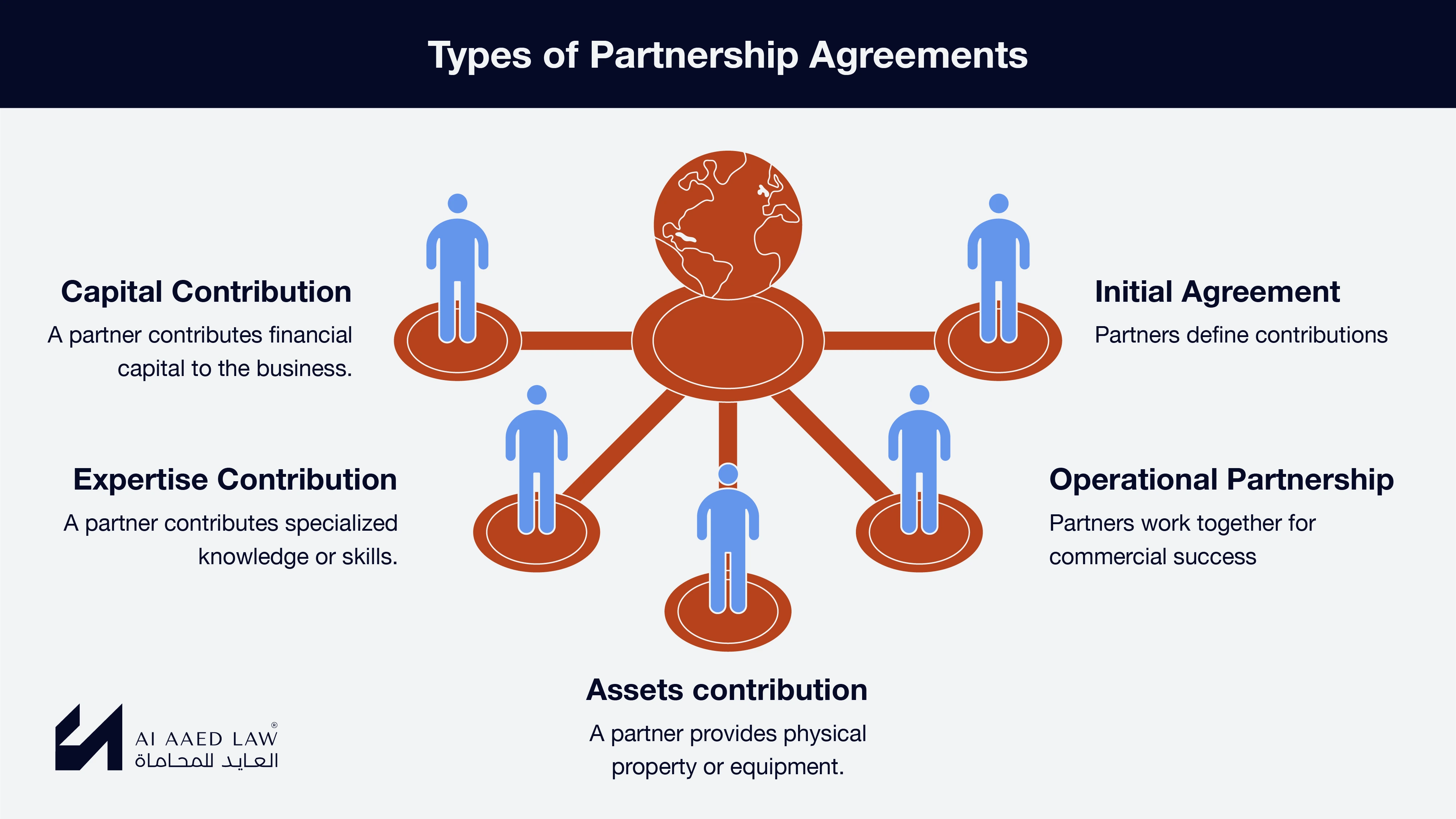
this topics vary according to the nature of each party’s contribution. A partnership may involve capital only, expertise and management, an individual partnering with a company, two companies working together, or an arrangement intended to precede the formal incorporation of a company.
Each structure can have different implications for management and risk. For example, a partnership in which one party manages day-to-day operations may require stronger reporting and oversight provisions than a passive investment partnership.
Key Terms and Conditions of a this topic
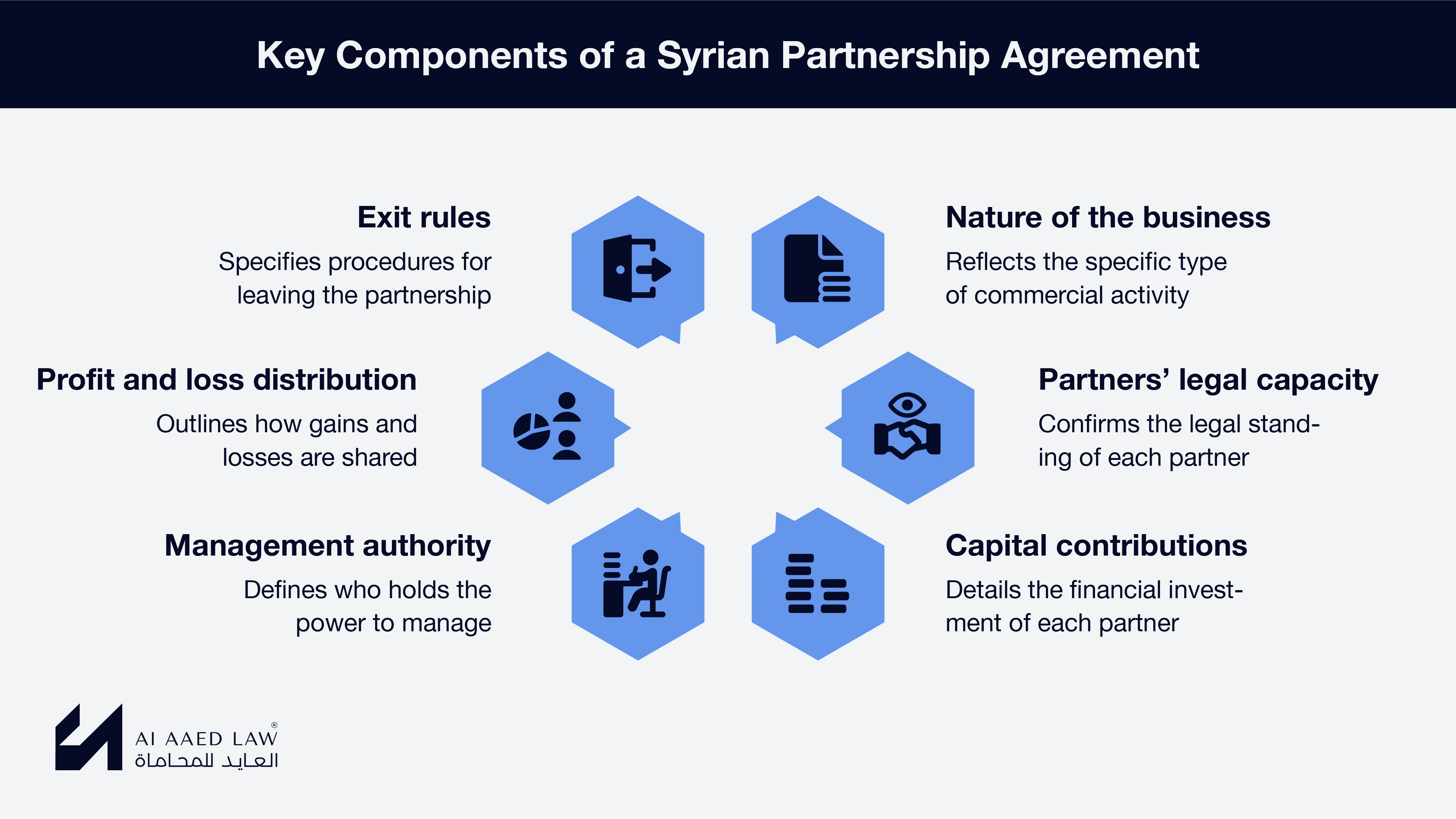
The strength of a this topic depends on the clarity of the provisions governing the relationship between the parties, not simply on having a written document. The agreement should address the essential issues concerning the business, contributions, rights, and obligations while ensuring that the necessary legal and practical requirements are considered before signing.
Essential Clauses in a this topic
Essential provisions typically include the partners’ details, description of the business activity, value of contributions, ownership interests, management arrangements, bank accounts, distribution of profits and losses, each party’s obligations, confidentiality, non-compete provisions, withdrawal, liquidation, and dispute resolution.
These clauses should be capable of practical application rather than relying on broad statements such as agreeing to cooperate in good faith or distributing profits by mutual agreement.
Legal and Practical Conditions to Review Before Signing
Among the key conditions of a this topic are that its subject matter is lawful and clearly defined, each partner’s contribution is specified, the allocation of profits and losses can be determined, and every party has the necessary legal capacity to enter into the agreement.
It is also important to confirm that a person signing on behalf of a company or other business entity has the necessary legal authority. A lack of proper authority can create significant disputes later.
Capital, Ownership Interests, Profits, and Losses
Financial arrangements are among the most common sources of disagreement between partners, making it important to define them carefully from the outset. The this topic should specify the value of each partner’s contribution and ownership interest, as well as the method used to calculate and distribute profits and determine how losses will be borne.
Defining Capital and Partners’ Ownership Interests
Simply stating the amount of capital is not enough. The agreement should explain how and when the capital will be contributed, its source where relevant, and whether the contribution consists of cash, assets, equipment, or professional services.
Where non-cash assets are contributed, they should be valued using a clear method. Overvaluing an asset can distort ownership interests and affect both profit distributions and liquidation. A signed schedule setting out each partner’s contributions can provide greater clarity.
Distribution of Profits and Losses Between Partners
Profit distribution should be linked to a defined accounting mechanism. The agreement should establish when accounts are closed, which expenses are recognized, whether reserves will be maintained, and whether profits will be distributed in cash or retained for business expansion.
The agreement should also specify how losses are allocated between the partners according to the nature and legal structure of the partnership. Ambiguity on this issue can quickly lead to disputes.
Management, Decision-Making, and Partner Responsibilities
Ownership percentages alone do not determine who manages the business or has authority to make decisions. A this topic should clearly establish management powers alongside each partner’s responsibilities and obligations, reducing the risk of overlapping authority or disputes over accountability.
Management Powers and Decision-Making
A well-drafted agreement distinguishes between day-to-day management and major business decisions. A manager may have authority to make purchases and enter into contracts within specified financial limits, while decisions such as borrowing money, selling a major asset, changing the nature of the business, admitting a new partner, or entering into long-term commitments may require special approval.
Defining voting procedures and the required approval thresholds can help prevent both operational deadlock and unilateral decision-making.
Responsibilities and Legal Obligations of Each Partner
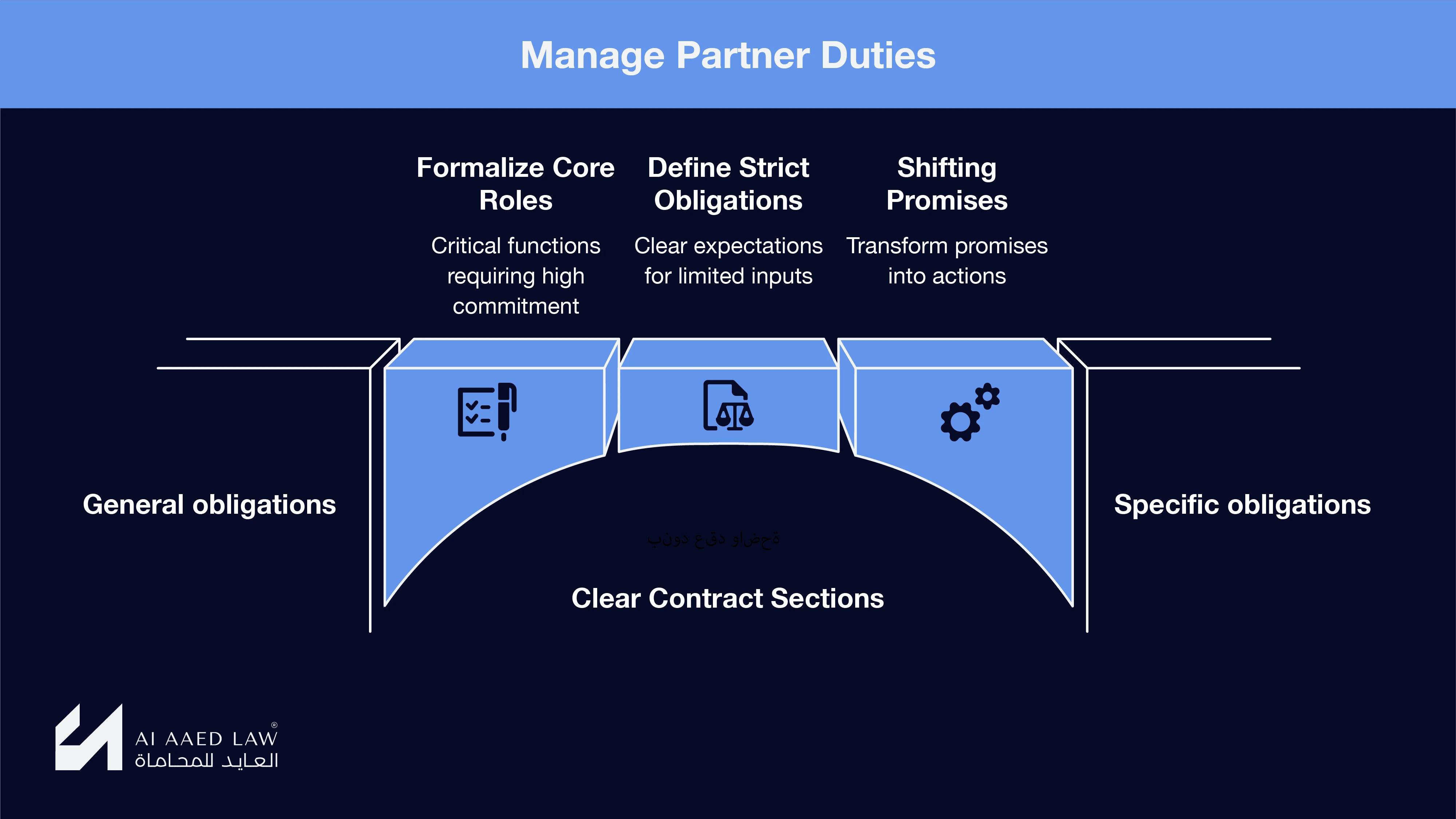
The agreement should clarify whether a partner is required to commit a specific amount of working time, provide funding, manage client relationships, oversee operations, or contribute specialist expertise.
It should also establish the consequences of failing to meet those obligations. Depending on the arrangement, these may include compensation, reduced authority, removal from management, or the purchase of the partner’s interest. Vague commitments are difficult to enforce, so promises should be converted into clear and measurable contractual obligations.
Partner Withdrawal, Exit, and Dispute Resolution
A this topic should address potential disagreements and the departure of a partner before either situation occurs. Clear procedures for withdrawal, valuation of ownership interests, and dispute resolution can help preserve business continuity and reduce the impact of personal or commercial disagreements on operations.
Withdrawal and Exit Clauses
A partner’s departure should not leave the business in uncertainty. The agreement should specify the required notice period, how the departing partner’s interest will be valued, whether the remaining partners have a right of first refusal, how payment will be made, and how existing debts will be handled.
It may also need to address the departing partner’s use of customer relationships, confidential information, or business data after leaving. These provisions are particularly important when one partner maintains the primary relationship with major customers or suppliers.
Dispute Resolution Between Partners
Dispute resolution may begin with written negotiation, followed by mediation or a formal notice, and ly litigation or arbitration where appropriate for the relationship.
The agreement should identify relevant matters such as the applicable law, competent court or agreed dispute resolution forum, language, and method or address for formal notices. A clear dispute resolution process can save time and money while preventing an operational disagreement from bringing the entire business to a standstill.
Drafting and Authentication of a this topic in Syria
Clear legal drafting and appropriate authentication can strengthen the partners’ ability to establish their rights and rely on the agreement if a dispute arises. Partners should therefore consider both how the this topic is prepared. They should agree whether authentication is appropriate, while avoiding drafting mistakes that could make important provisions ambiguous or difficult to enforce.
Authentication of this topics
Authentication becomes particularly important. This is especially where the partnership involves substantial amounts of money, valuable assets, real estate, licenses, major suppliers, or dealings with government authorities and banks.
Authentication doesn't correct weak drafting, but it can strengthen the evidentiary value of the agreement. It can also reduce the possibility of disputes over signatures or the date of the agreement. The document should therefore be reviewed from both legal and financial perspectives before authentication.
Common this topic Drafting Mistakes
Common mistakes include relying on a generic template found online, failing to establish a method for valuing ownership interests. This leave signing authority undefined, confusing revenue with profit, failing to address losses, and neglecting to establish an exit mechanism.
Another mistake is treating trust as a substitute for a written agreement. Trust is important in any business relationship, but it does not determine who bears a debt or who has decision-making authority when a disagreement occurs.
The Role of a Lawyer in Drafting a this topic
A lawyer’s role begins with understanding the business model, source of funding, relationship between the partners, relevant risks, and the commercial objective of the partnership.
The lawyer can then translate these arrangements into enforceable contractual provisions and review their compatibility with Syrian law and applicable commercial obligations. Legal advice can also help determine whether a this topic is sufficient for the proposed arrangement or whether the business should establish a separate company.
Reviewing a this topic Before Signing
Before signing, each partner should review the agreement from both a practical and legal perspective rather than focusing only on ownership percentages and expected profits. The review should cover several parts. This includes actual contributions, decision-making powers, financial obligations, exit mechanisms, and dispute resolution. That way, every party understands the consequences of the agreement from the outset.
Practical Considerations Before Signing
Before signing a this topic between two parties, request a clear record of contributions and obligations, review applicable taxes and licensing requirements, establish accounting procedures, avoid granting unrestricted authority, and make sure the agreement contains fair exit provisions.
If the partnership will conduct business with third parties under an established commercial name, the partners should also consider whether establishing a company would provide a more appropriate legal structure for organizing the relationship and conducting the business.
This article is provided for general information only and does not constitute legal advice. For advice on a specific matter, contact AL AAED Law Firm.
Official source: Syrian Ministry of Justice