Company formation in Syria starts before any application is filed. The most important decision is the legal structure that fits the activity, risk level, funding model, and number of partners. A wrong choice may create unexpected liability, make it harder to add investors, delay licensing, or complicate dealings with banks and public authorities.
This guide explains the legal thinking behind incorporation, then moves to documents, procedures, and post formation duties. The aim is to help business owners build a company that can be registered and operated properly. Requirements may differ depending on the activity and current administrative practice.
Summary of key points
| Topic | Key point |
|---|---|
| What Should You Know Before Company Formation in Syria? | Before company formation in Syria, the founder should define the type of company they would like to start. |
| Preparing for Company Formation | Once you have selected the appropriate business structure, the next step is preparing the legal and administrative requirements needed for registration. |
| Key takeaways | Before company formation in Syria, the founder should define the type of company they would like to start. |
| Company Registration Procedures in Syria | After preparing the required documents, founders can begin the formal company registration process with the competent authorities. |
| Managing the Company After Formation | Successfully registering a company is only the beginning. |
| Common Challenges During Company Formation | Many registration delays can be avoided through careful planning and proper legal guidance. |
What Should You Know Before Company Formation in Syria?
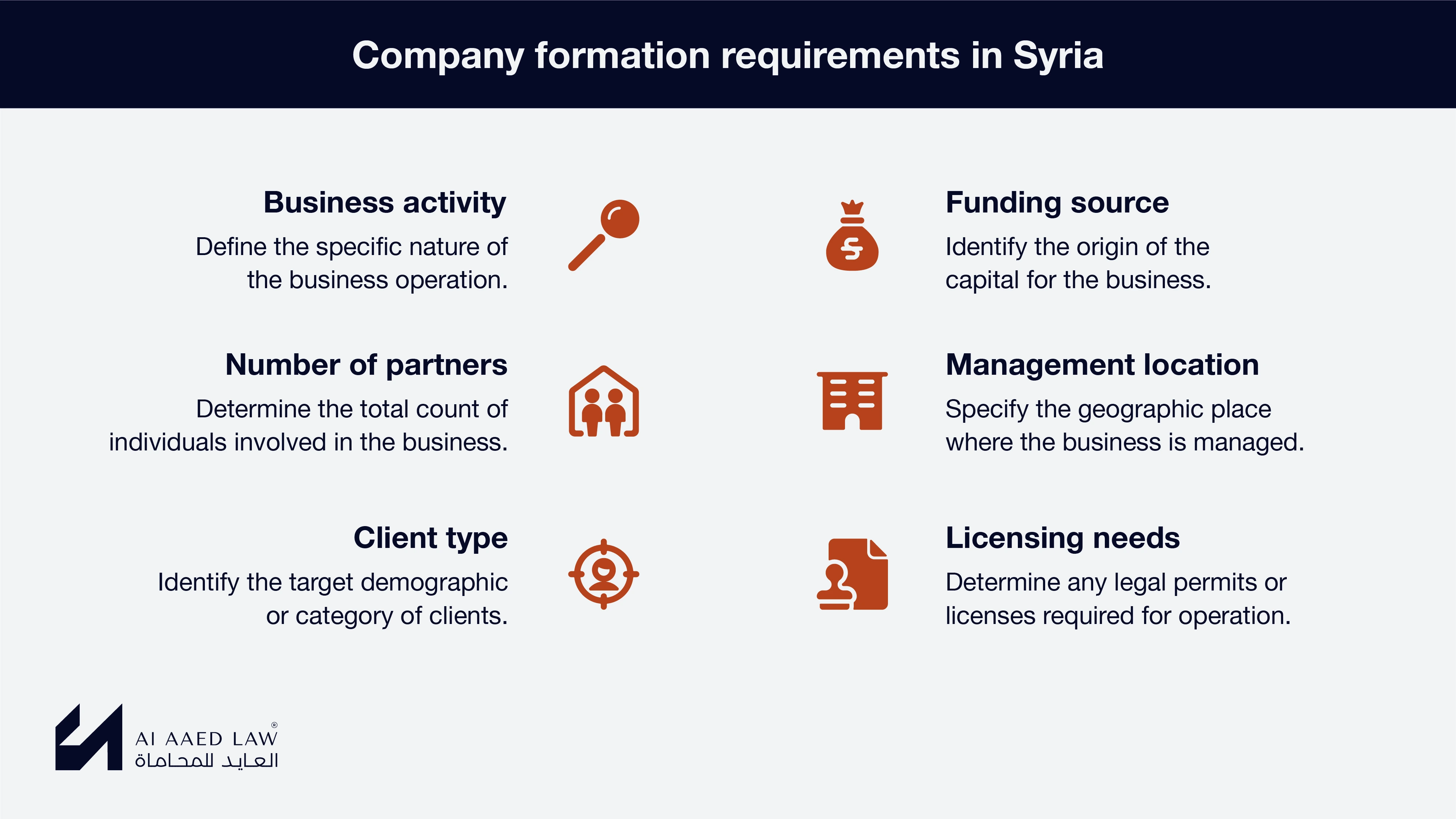
Before company formation in Syria, the founder should define the type of company they would like to start. They should define the business activity, funding source, number of partners, management location, client type, and any licensing needs. Some activities may fit a sole establishment, while others require a company because of partners, assets, financing, or the need to separate business risk from personal assets.
Choosing the Right Legal Structure
The legal structure is not just a label. It affects liability, management, share transfer, tax treatment, and required disclosures. Common options include partnerships, limited liability companies , joint stock companies, and sole establishments. The right choice depends on risk, capital, partners, and future expansion.
Company Formation Conditions in Syria for Business Owners
General conditions include legally capable founders, a lawful activity, a registrable trade name, proper articles or bylaws, a company address, and clear details on capital and management. Certain activities may also require sector approvals before or after commercial registration.
The Difference Between Forming a Company and a Sole Establishment in Syria
A sole establishment in Syria may suit a small activity operated by one person, often with direct responsibility for obligations. A company offers a better structure when there are partners, assets, funding, or larger contracts. Depending on the structure, it may create a separate legal personality.
Preparing for Company Formation
Once you have selected the appropriate business structure, the next step is preparing the legal and administrative requirements needed for registration. Proper preparation helps avoid delays and reduces the likelihood of rejected applications.
Documents Required for Company Formation
Key takeaways
- Before company formation in Syria, the founder should define the type of company they would like to start.
- Once you have selected the appropriate business structure, the next step is preparing the legal and administrative requirements needed for registration.
- After preparing the required documents, founders can begin the formal company registration process with the competent authorities.
- Successfully registering a company is only the beginning.
- Many registration delays can be avoided through careful planning and proper legal guidance.
Required documents differ by company type and activity. They often include founder details, identity or representation documents, articles of association, bylaws where needed, address evidence, manager details, capital or share information, and any sector approvals. Foreign documents may require translation and legalization.
Defining Capital and Company Activity
Capital should reflect initial operational needs and obligations, not only a formal number. The activity clause should be wide enough to support planned work but not so broad that it triggers unnecessary approvals. A narrow activity can restrict growth, while an unclear one can delay registration.
Preparing the Articles of Association and Bylaws
The articles identify founders, shares, management, purpose, capital, and registered office. Bylaws define governance, meetings, signing powers, controls, and share amendments. These documents matter later when adding a partner, resolving a dispute , obtaining financing, or selling a share.
Choosing a Suitable and Registrable Trade Name
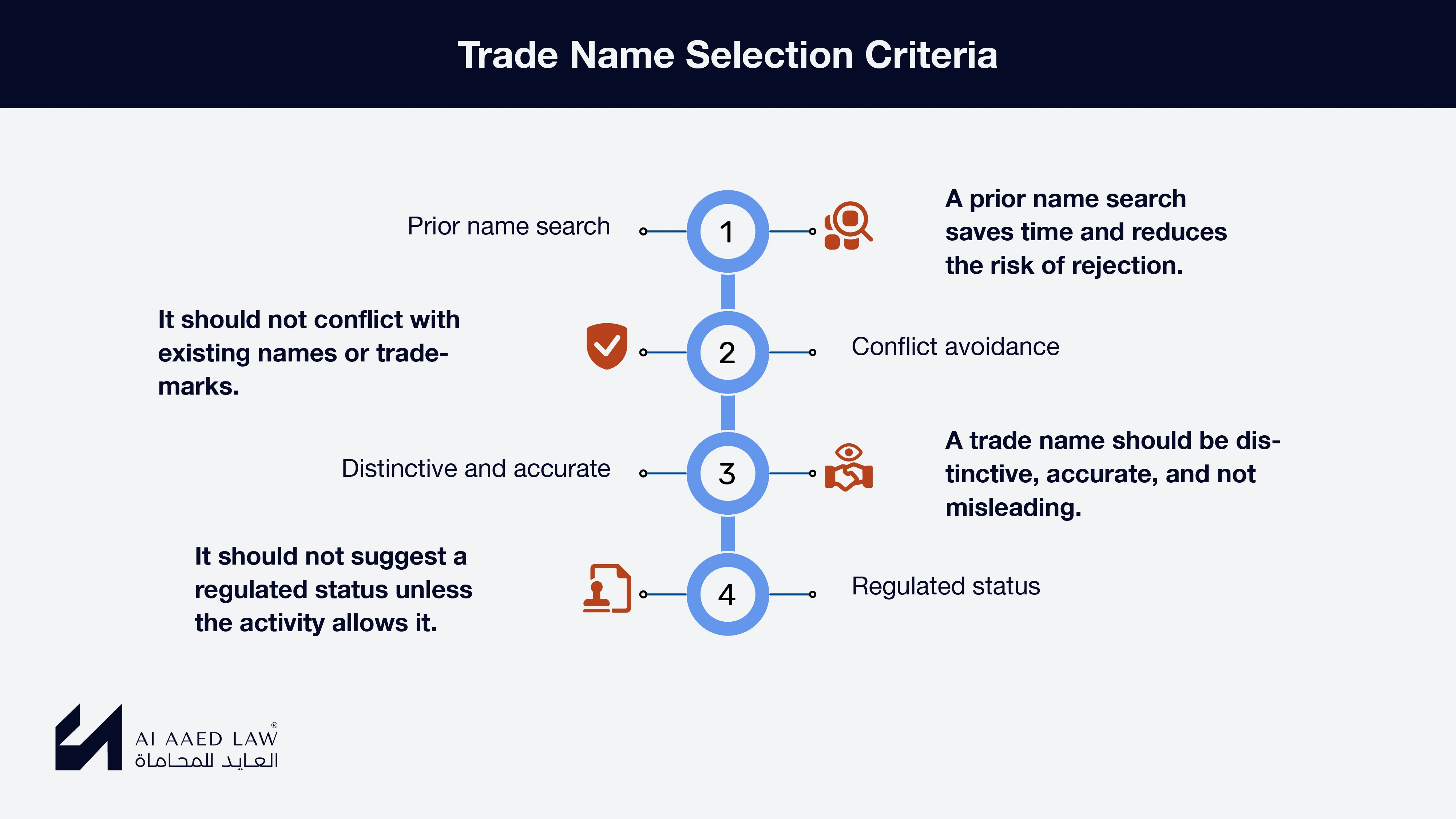
A trade name should be distinctive, accurate, and not misleading. It should not conflict with existing names or trademarks, and it should not suggest a regulated status unless the activity allows it. A prior name search saves time and reduces the risk of rejection.
Company Registration Procedures in Syria
After preparing the required documents, founders can begin the formal company registration process with the competent authorities. The exact procedure varies depending on the legal structure and business activity, but the overall process generally follows the same sequence.
Registration Procedures Before the Competent Authorities
Registration usually involves name review, document review, filing the articles, completing any approvals, entering the company or establishment in the competent register, and then handling tax and licensing steps. A consistent file reduces correction requests.
Obtaining the Commercial Register and Required Licenses
Commercial registration proves that the activity is recorded, but it does not always mean all operating licenses are complete. Some sectors require professional, industrial, health, municipal, or other approvals. The founder should separate entity formation from the legal right to operate the business.
Tax and Accounting Duties After Formation
After registration, the company must manage books, invoices, declarations, document retention, and any employee related registrations. Ignoring post formation duties can create fines, block expansion, or complicate investment, sale, or liquidation.
Managing the Company After Formation
Successfully registering a company is only the beginning. Clear governance arrangements and ongoing legal compliance are essential for stable business operations and future growth.
Forming a Company Between Partners: What Should Be Organized?
Partners should organize shares, management, voting, share transfers, non competition, additional funding, exit valuation, and profit distribution. They should also define who signs for the company and within what limits. These details matter more than simply agreeing on percentages.
Legal Tips Before Starting Commercial Activity
Before trading, review the trade name, register the trademark if needed, obtain licenses, organize supplier and customer contracts, and separate company accounts from personal accounts. Company documents should also be updated when partners, managers, or activities change.
Common Challenges During Company Formation
Many registration delays can be avoided through careful planning and proper legal guidance. Understanding the most common issues allows founders to complete the incorporation process more efficiently.
Common Mistakes That Delay Company Formation
Common mistakes include choosing an inaccurate activity, filing a name that can be challenged, inconsistent partner details, missing powers of attorney, unlegalized foreign documents, and failing to check sector licenses. Copying articles from another case can also create avoidable objections.
When Do You Need a Corporate Lawyer During Formation?
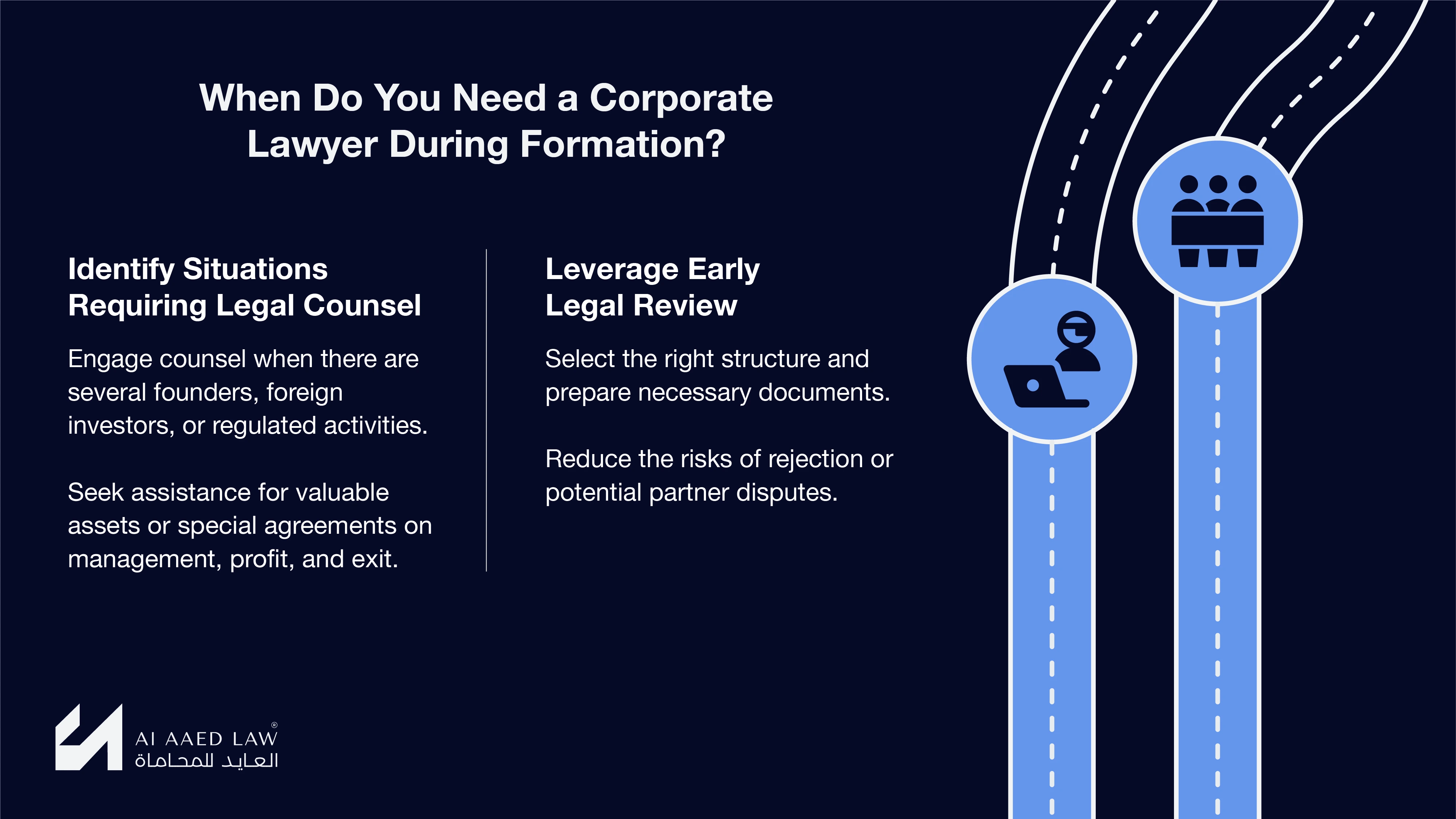
A corporate lawyer is useful when there are several founders, foreign investors, regulated activities, valuable assets, or special agreements on management, profit, and exit. Early legal review helps select the right structure, prepare documents, and reduce rejection or partner dispute risks.
This article is provided for general information only and does not constitute legal advice. For advice on a specific matter, contact AL AAED Law Firm.
Official source: Central Bank of Syria