Introduction
A buyer does not acquire only a company name, a project licence or a group of visible assets. Depending on the transaction structure, it may also acquire historic obligations, defective approvals, unregistered security, employee claims, contract defaults, ownership disputes and restrictions that appear only after signing. Legal due diligence is the controlled process used to find those issues early enough to change the structure, price, conditions or decision.
The Syrian legal review is rarely contained in one register. It can require the Companies Law, Commercial Code, Investment Law and its amendments, sector rules, Competition Law, Labour Law, intellectual-property legislation, property records and current cross-border restrictions to be read together.[1][2][3][4][5][6][7]
This guide does not repeat Al AAED Law's articles on company formation, types of companies or investment law.[17][18] It addresses the next question: before acquiring or funding an existing Syrian business or project, what should the investor verify, how should findings be ranked, and how should the transaction documents respond?
Quick answer
Effective due diligence in Syria begins by defining the proposed deal. A share purchase, asset purchase, merger, minority investment and joint venture carry different liabilities and require different consents. The review then tests five propositions: the target exists and the seller owns what is being sold; the decision-makers have authority; the business can lawfully operate; the material assets and cash flows are supported by enforceable rights; and identified liabilities can be accepted, remedied or allocated.
At minimum, the legal team should reconcile current registry extracts with constitutive documents and ownership records; verify licences, title, material contracts, finance, tax, employment, litigation and intellectual property; identify ultimate owners and controllers; and screen the parties, banks, goods, technology and payment route under every applicable sanctions and export-control regime. Current relief has removed many broad Syria restrictions, but targeted measures and controlled-item rules remain.[10][11][12][13]
Due diligence is not a certificate that a transaction is safe. It is an evidence-based risk assessment. Missing documents, inconsistent records and an inability to verify management statements are themselves findings. The final report should connect each material finding to a decision: stop the deal, change its structure, require remediation or consent before closing, adjust the price, retain funds, obtain a warranty or indemnity, or accept a clearly disclosed risk.
What legal due diligence does
Purpose of the review
The purpose is to give the investor a reliable legal picture of the target and the proposed transfer. A useful review answers not only “what documents exist?” but also “what right does each document prove, is it current, who can challenge it, and what happens to it at closing?”
Legal diligence also supports financial and commercial diligence. A revenue forecast is weaker if a major customer can terminate on a change of control. The value of a factory is different if the land title is disputed, essential equipment is pledged, or an environmental or operating approval is missing.
What diligence cannot guarantee
No review can eliminate fraud, undisclosed conduct, future regulatory change or a fact that no reasonable search could reveal. Public-record access and document completeness can also vary. The report should therefore identify the evidence reviewed, its date and source, the assumptions used, unavailable material and any matter reserved for specialist advice.
A seller's statement is not equivalent to an official extract, and an old certified document is not necessarily evidence of the current position. Material facts should be corroborated through independent records, counterparties or authorities where lawful and practical.
Evidence hierarchy and verification
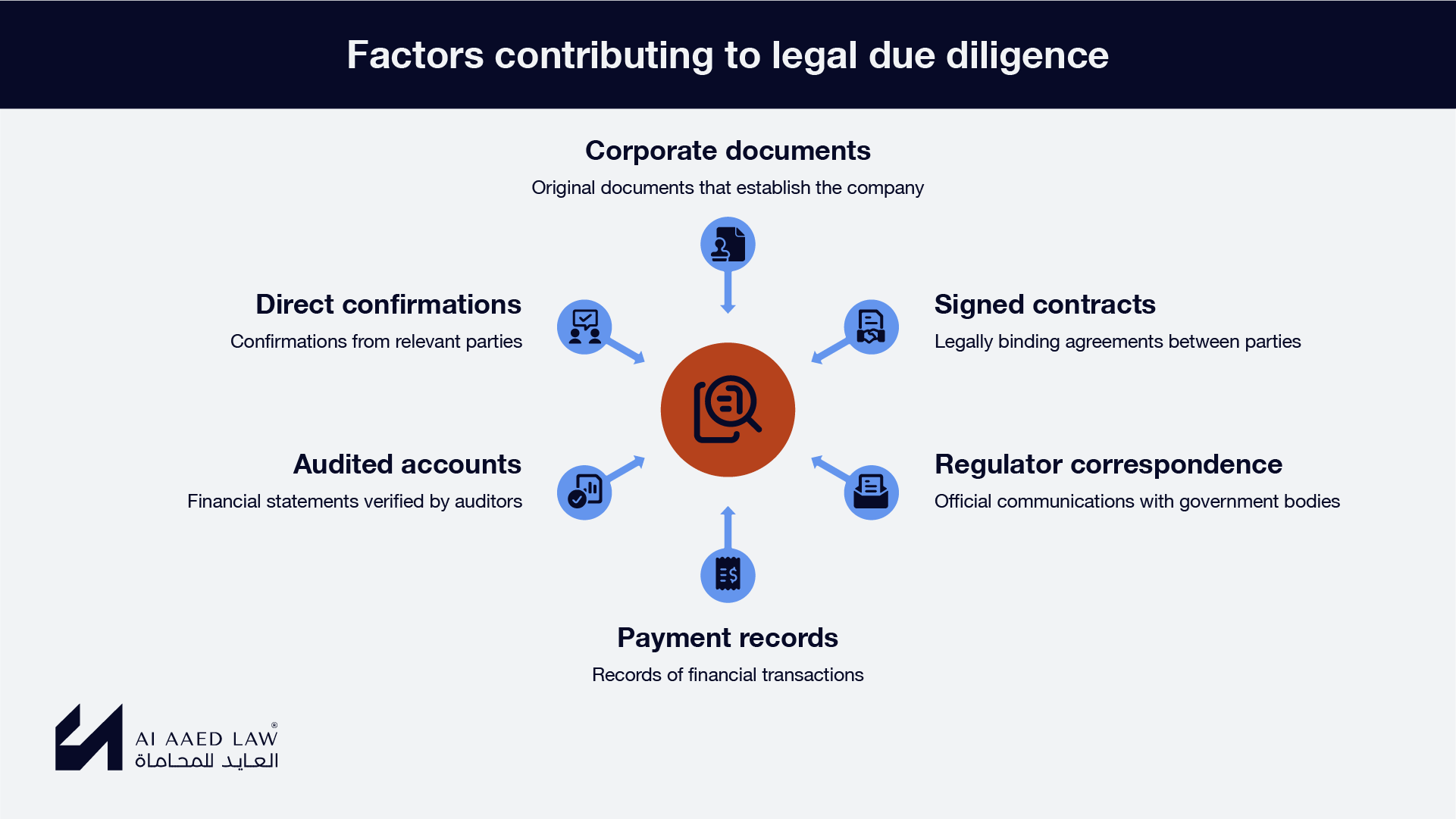
The strongest file usually combines certified registry and title evidence, original or authenticated corporate documents, signed contracts, regulator correspondence, payment records, audited accounts where available, and direct confirmations. Internal spreadsheets and management presentations remain useful, but they should be reconciled with the underlying records.
The Commercial Code treats the Commercial Register as a publicity mechanism and permits certified extracts. The 2026 registration reforms also continue to change how company records are submitted and processed, making the date and route of verification important.[2][8][9]
Choosing the transaction structure
Share acquisition
In a share acquisition, the target normally continues to own its assets, contracts and liabilities; the buyer acquires an ownership interest in that continuing entity. This makes historic liabilities central. The review should establish the full capitalization, title to the shares or quotas, prior transfers, unpaid capital, shareholder arrangements, pre-emption rights, pledges, corporate approvals and any restrictions on the buyer.
The Companies Law recognizes several entity forms, and governance, transfer and approval rules differ between them. The constitutive instrument and all amendments must therefore be read with the statute and current registry file.[1]
Asset acquisition
An asset acquisition can allow the buyer to define what will be transferred and which obligations it will expressly assume. It does not make the transaction automatically liability-free. Title must be verified asset by asset, security must be released or assumed, contracts may require assignment consent, licences may be personal or non-transferable, and labour or tax rules can attach consequences to a business transfer.
The Labour Law states that merger or transfer of an enterprise by sale and specified other means does not terminate employment contracts, and it addresses responsibility for obligations arising before transfer. Employment consequences must therefore be analysed before an asset deal is chosen merely to avoid company liabilities.[6]
Minority investment or joint venture
A minority investor may not control daily operations but can still bear economic, reputational, sanctions and governance risk. Diligence should focus on information rights, reserved matters, board representation, related-party dealings, capital calls, dilution, deadlock, transfer restrictions, exit rights and the enforceability of the shareholders' or joint-venture agreement.
The investor should also test whether veto or appointment rights create regulatory control or an economic concentration, and whether the chosen vehicle and investment activity need approvals under the investment or sector regime.[3][4][5]
Merger or restructuring
A statutory merger or wider restructuring requires analysis of succession, creditor protection, employee continuity, competition, tax, licences and the corporate steps applicable to each entity. It should not be treated as a filing exercise after the commercial terms are agreed.
The Competition Law defines economic concentration broadly enough to include transactions transferring ownership, use, assets, shares or commitments that enable direct or indirect control. The review must assess substance, not only the label given to the deal.[5]
| Structure | Principal diligence focus | Typical transaction response |
|---|---|---|
| Share acquisition | Ownership, capitalization, historic liabilities, governance, change-of-control provisions | Title warranty, debt and liability protections, conditions, disclosure and indemnities |
| Asset acquisition | Asset title, security, assignment, licences, employees and assumed liabilities | Detailed asset and liability schedule, transfer instruments, consents and releases |
| Minority investment or joint venture | Governance, reserved matters, related parties, funding, dilution, deadlock and exit | Shareholders' agreement, information rights, vetoes, transfer and exit mechanisms |
| Merger or restructuring | Statutory succession, creditors, employees, tax, competition and licences | Merger plan, corporate approvals, authority clearances and integration covenants |
Scoping the review
Red-flag review or full review
A red-flag review concentrates on issues capable of blocking the transaction or materially changing value, timing or liability. A full review examines the defined legal workstreams in greater depth and records lower-level compliance issues. The choice should reflect deal value, investor exposure, target complexity, available time and the reliability of information.
“Red flag” should not mean “quick look at whatever the seller uploaded.” The engagement should still define mandatory documents, verification searches, materiality and escalation rules. If the first review reveals weak records or inconsistencies, the scope should expand.
Materiality and sampling
Materiality can be financial, legal or operational. A low-value permit may be essential to the only revenue-producing site. A customer contract below the monetary threshold may contain exclusivity that restricts the whole business. Certain matters-title, authority, sanctions, fraud, criminal exposure and essential licensing-should not be excluded only because of value.
Sampling can be appropriate for repetitive files such as standard employment contracts or low-value sales terms. The sample method should be stated, and exceptions should be tested separately rather than averaged away.
Data room and management questions
The information request should be indexed by workstream, legal entity, date and status. Each upload should retain a stable name and version. The question log should record who answered, the supporting evidence, any follow-up and whether the answer changes the report.
Access should follow confidentiality and data-minimization rules. Personal, banking, privileged or security-sensitive information should be shared only with the people who need it, through an agreed channel, and subject to a retention or return protocol.
Timeline specialists and responsibility
The diligence plan should work backwards from the intended signing and closing dates. It must allow time for official extracts, foreign document legalization, translations, regulator contact, third-party consents and remediation. Corporate, tax, finance, technical, environmental, cyber and sanctions advisers should use one issue list so that gaps do not fall between workstreams.
Responsibility should be explicit. The investor decides risk appetite; management supplies and certifies information; legal counsel analyses rights and liabilities; and financial or technical specialists test matters within their competence.
Corporate status ownership and authority
Existence form and public record
Obtain a current Commercial Register extract, formation decision, constitutive instrument and every amendment. Confirm the legal name in Arabic and any other language, form, number, date, registered office, objects, branches, capital, duration, status, managers and authorized signatories. Reconcile differences before relying on the target's description of itself.[1][2]
The July 2026 circular simplified the initial registration sequence but expressly preserved approvals for named regulated activities. A commercial record therefore does not prove that the target has completed every operating, tax or sector requirement.[8]
Ownership capitalization and title
Build a complete ownership table from formation to the proposed sale. Review subscriptions, contributions, share or quota transfers, inheritance, court orders, capital increases or reductions, pledges, usufructs, nominee arrangements and beneficial ownership. Confirm that the seller owns the exact interest being transferred and can deliver it free of undisclosed rights.
For a foreign shareholder or layered group, trace ownership and control to natural persons and reconcile corporate documents from every jurisdiction. Legalization, certified translation and authority evidence should be addressed early.
Corporate authority and approvals
Review shareholder, partner and board minutes; appointment and signing rules; powers of attorney; reserved matters; quorum and voting requirements; conflicts; and any prior transaction approvals. The person negotiating a deal may not be the person authorized to bind the entity.
Prepare a signing-authority memorandum for both buyer and seller. It should identify the required resolutions, signatories, form of power, legalization or notarization, and any regulator, lender or shareholder consent needed for signing or closing.
Related parties and ultimate control
Map affiliates, common owners, family relationships, management interests and transactions with related persons. Test whether assets, staff, licences, customers or intellectual property used by the target actually belong to an owner or sister company. Review pricing, balances, guarantees and arrangements that may end after closing.
The commercial agreement should not assume that informal group support will continue. Essential related-party rights should be transferred, documented on arm's-length terms or replaced before closing.
Contracts customers and suppliers
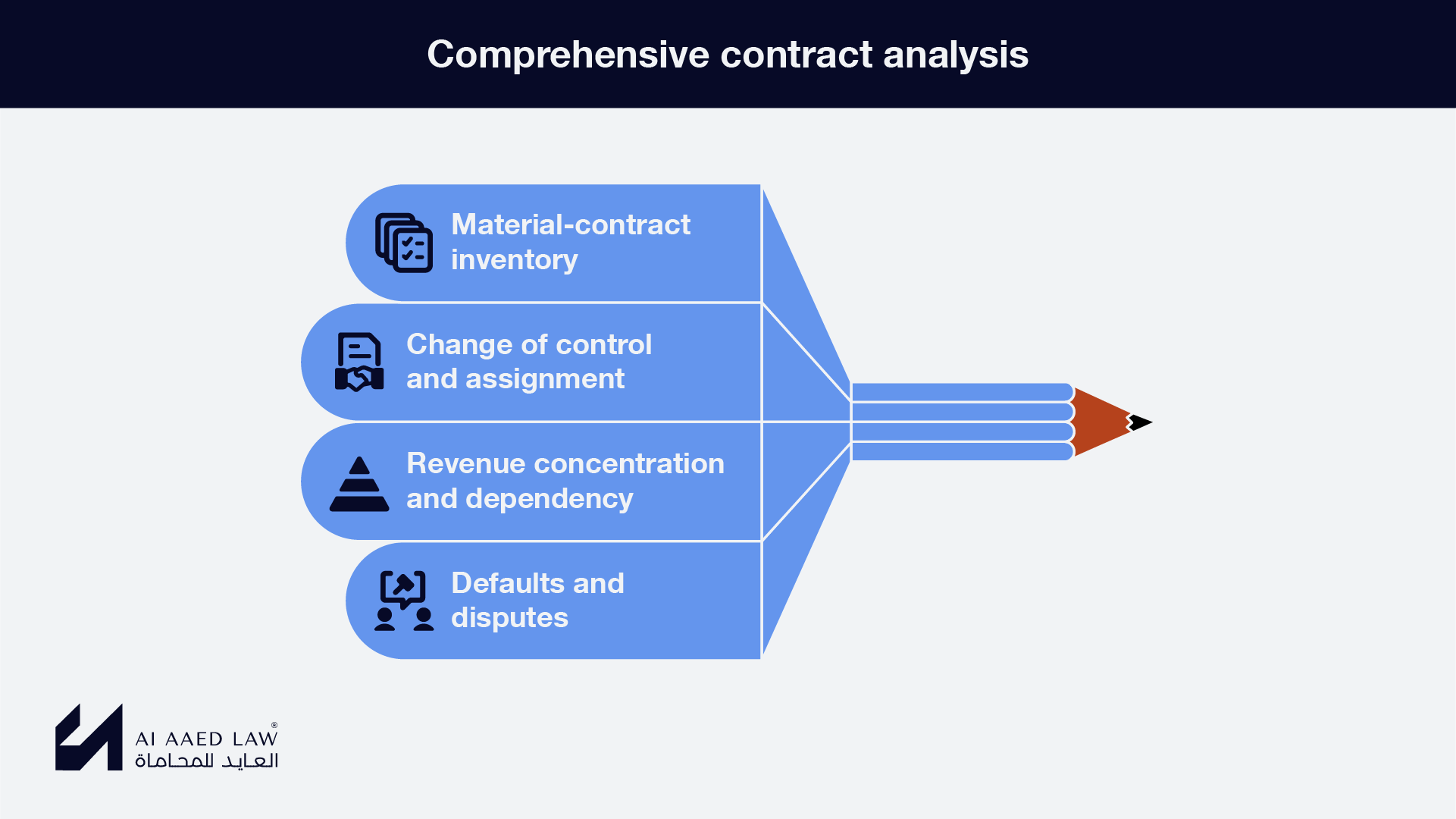
Material-contract inventory
Create a schedule of major customers, suppliers, distributors, agents, landlords, technology providers, utilities, logistics providers, public bodies and other critical counterparties. Record term, value, renewal, termination, governing law, dispute clause, exclusivity, minimum purchase, liability cap and security.
Compare the schedule with revenue, expense and payment data. A contract list prepared by management can omit expired agreements still being performed, oral arrangements or documents held by a branch.
Change of control assignment and consent
Share deals may trigger change-of-control, ownership-notification or termination clauses even though the contracting company remains the same. Asset deals often require assignment, novation or a new contract. Government and regulated contracts can impose separate consent or eligibility conditions.
List every required consent as a signing condition, closing condition or post-closing item. The transaction documents should allocate the risk of refusal and prohibit steps that breach a contract while consent is pending.
Revenue concentration and dependency
Legal diligence should identify customers, licences, locations, suppliers and individuals without which the business cannot operate. It should test whether apparent recurring revenue depends on short-term orders, discretionary renewals or a relationship held personally by the seller.
Concentration is not necessarily a defect, but it affects value and protections. The buyer may require renewal, customer confirmation, a transition covenant, a retention arrangement or a price mechanism.
Defaults disputes and informal variations
Review notices of breach, reservation of rights, complaints, credits, service failures, late payments and threatened termination. Compare actual performance with written terms and identify waivers or variations that were never documented.
The transaction agreement should not describe all contracts as fully performed if the diligence file shows exceptions. Specific disclosure is more useful than a broad qualification hidden in a data room.
Licences regulation and competition
Operating and sector licences
Prepare a licence matrix showing holder, activity, premises, authority, issue and expiry dates, renewal status, conditions, inspections, breaches and transfer or change-of-control rules. Confirm that the legal entity earning the revenue is the entity named on the approval.
The 2026 registry circular identified activities that remain subject to prior or supervisory approvals, including banking, exchange, remittances, insurance and specified real-estate and security activities. Other sectors may have their own rules, so the list is not a universal licence catalogue.[8]
Investment-law status
Determine whether the project holds or requires an investment licence and which benefits, guarantees, obligations, milestones or sector conditions attach. Investment Law No. 18 of 2021 has been amended by Law No. 2 of 2023 and Decree No. 114 of 2025; implementing instructions issued in November 2025 address licensing, investor rights and duties, special economic zones, transfer of projects, changes in ownership and dispute settlement.[3][4][14]
An investor should verify the actual licence and correspondence rather than assume that a project qualifies because of its sector. A transfer, ownership increase, change in scope or restructuring may require authority involvement.
Competition and economic concentration
Law No. 7 of 2008 applies to economic activity in Syria and to certain conduct outside Syria that has harmful domestic effects. Its economic-concentration provisions cover transactions producing direct or indirect control. The statutory text calls for written Competition Council consent where the relevant share exceeds 30% of total market operations and requires an application within 30 days after a draft or final concentration agreement.[5]
Market definition and administrative practice can be decisive. Parties should obtain current advice from the competent authority before signing or implementing a transaction that may reach the rule, and should build any clearance and standstill obligation into the timetable.
Public-sector and government arrangements
Contracts, concessions, public-private arrangements, public assets and government receivables require a separate review of authority, procurement path, appropriations, variation, termination, audit, immunity and dispute provisions. A commercial counterparty's signature may not by itself establish valid public authority.
Confirm whether a change in ownership, subcontractor, financing or control requires consent. Payments, agents and commissions should receive enhanced integrity review.
Assets real estate and security
Real estate title and use rights
For each site, obtain current cadastral or land-record evidence, survey and location material, acquisition documents, encumbrance information, leases, zoning and construction approvals, occupancy evidence and any expropriation, boundary or possession dispute. The Civil Code and land-registration rules make formal registration central to real rights; possession or an informal contract should not be treated as registered ownership.[16]
The review should distinguish ownership, lease, usufruct, allocation, concession and tolerated occupation. Also confirm whether the buyer or foreign-controlled vehicle can hold the proposed right and whether a project-specific investment approval changes the analysis.[3][4]
Movables inventory and key equipment
Match fixed-asset and inventory lists to invoices, customs documents, serial numbers, insurance and physical inspection. Determine whether equipment is owned, leased, financed, borrowed or held for a third party. Identify obsolete, damaged or inaccessible assets.
For an asset deal, the transfer schedule should describe assets precisely and allocate loss between signing and closing. For a share deal, confirm that important equipment is held by the target rather than an owner or affiliate.
Security guarantees and Store Register entries
Review bank facilities, pledges, mortgages, guarantees, liens, attachments, retention-of-title terms and security granted for another group member. Search the relevant public records, including the Store Register where the transaction or security concerns the commercial establishment under the Commercial Code.[2]
A lender's payoff figure is not a release. Closing deliverables should include the agreed release instrument, returned originals, cancelled registrations and authority to file each discharge.
Environmental health and physical access
Legal title is not enough if the site cannot lawfully operate. Review environmental and health approvals, waste and hazardous-material arrangements, water and energy rights, workplace safety records, inspections, remediation obligations and access or utility easements.
Technical specialists should test physical condition and contamination. The legal report should translate their findings into liability, permit, insurance, covenant and closing consequences.
Finance tax and contingent liabilities
Financial statements debt and cash
Reconcile legal entities in the accounts with the transaction perimeter. Review audited and management accounts, bank facilities, shareholder loans, factoring, leases, off-balance-sheet commitments, cash restrictions and events after the latest balance sheet. Confirm balances directly where possible.
Identify financial covenants and defaults triggered by the transaction. A buyer should know whether closing itself accelerates debt, ends a facility or requires a new banking route.
Tax files and clearances
Review registrations, returns, assessments, audits, objections, settlements, withholding, payroll, customs and property-related taxes for the legally relevant period. Compare tax activities and addresses with registry, accounts, contracts and licences. Obtain current clearances where available and appropriate.
Tax treatment depends on structure and facts. A share sale, asset transfer, merger, debt waiver, dividend or cross-border payment can produce different consequences. Specific tax advice should be completed before price and funds flow are fixed.
Guarantees claims and off-balance-sheet exposure
Search minutes, banking documents, major contracts and correspondence for guarantees, comfort letters, indemnities, pending claims, performance bonds, warranties, customer advances and commitments not fully reflected in the accounts. Ask management to certify completeness.
Group guarantees require particular attention. The target may secure an affiliate's debt even when it received no proceeds, and release can require lender consent before closing.
Insolvency and financial distress
Review overdue obligations, enforcement, returned payments, restructurings, creditor standstills, litigation, asset sales outside ordinary business and doubts about going concern. Test whether the transaction could prejudice creditors or be challenged under applicable insolvency principles.
Distress does not automatically prevent a transaction, but it changes authority, timing, valuation, payment protection and the need for creditor or court involvement.
Employment and social insurance
Workforce and contract map
Obtain an employee census by legal employer, location, role, start date, contract type, compensation, leave, benefits and work-permit status. Reconcile it with payroll, social-insurance records and the people actually working in the business.
Identify consultants or contractors who function as employees, staff employed by an affiliate and key people without enforceable contracts or confidentiality duties.
Minimum rights policies and records
Law No. 17 of 2010 sets minimum worker rights for the private and covered sectors and invalidates less favourable terms. Employers with fifteen or more workers must prepare internal regulations and a penalties list under Article 90, and Article 91 requires individual personnel files containing specified information.[6]
Diligence should test written contracts, internal rules, working time, leave, discipline, safety, equal treatment and recordkeeping against actual practice. A compliant template does not cure inconsistent implementation.
Wages benefits and social insurance
Reconcile contractual and actual wages, allowances, incentives, overtime, leave balances, severance exposure, expense practices and social-insurance contributions. Check for informal payments or benefits promised outside the payroll.
Outstanding employee amounts can have priority and can directly affect purchase price. Obtain authority statements or confirmations where appropriate, but also test them against internal records and employee claims.
Transfer dismissal and key-person risk
Article 12 of the Labour Law states that merger or transfer of an enterprise by inheritance, will, donation, rental, sale or public auction does not terminate employment contracts and addresses joint responsibility for obligations arising before transfer. The transaction structure and employee plan should reflect that rule.[6]
Identify consultation, notice, termination, transfer and work-permit steps. Retention arrangements should be documented, not left as a handshake with the seller or a key manager.
Litigation intellectual property and data
Litigation arbitration and enforcement
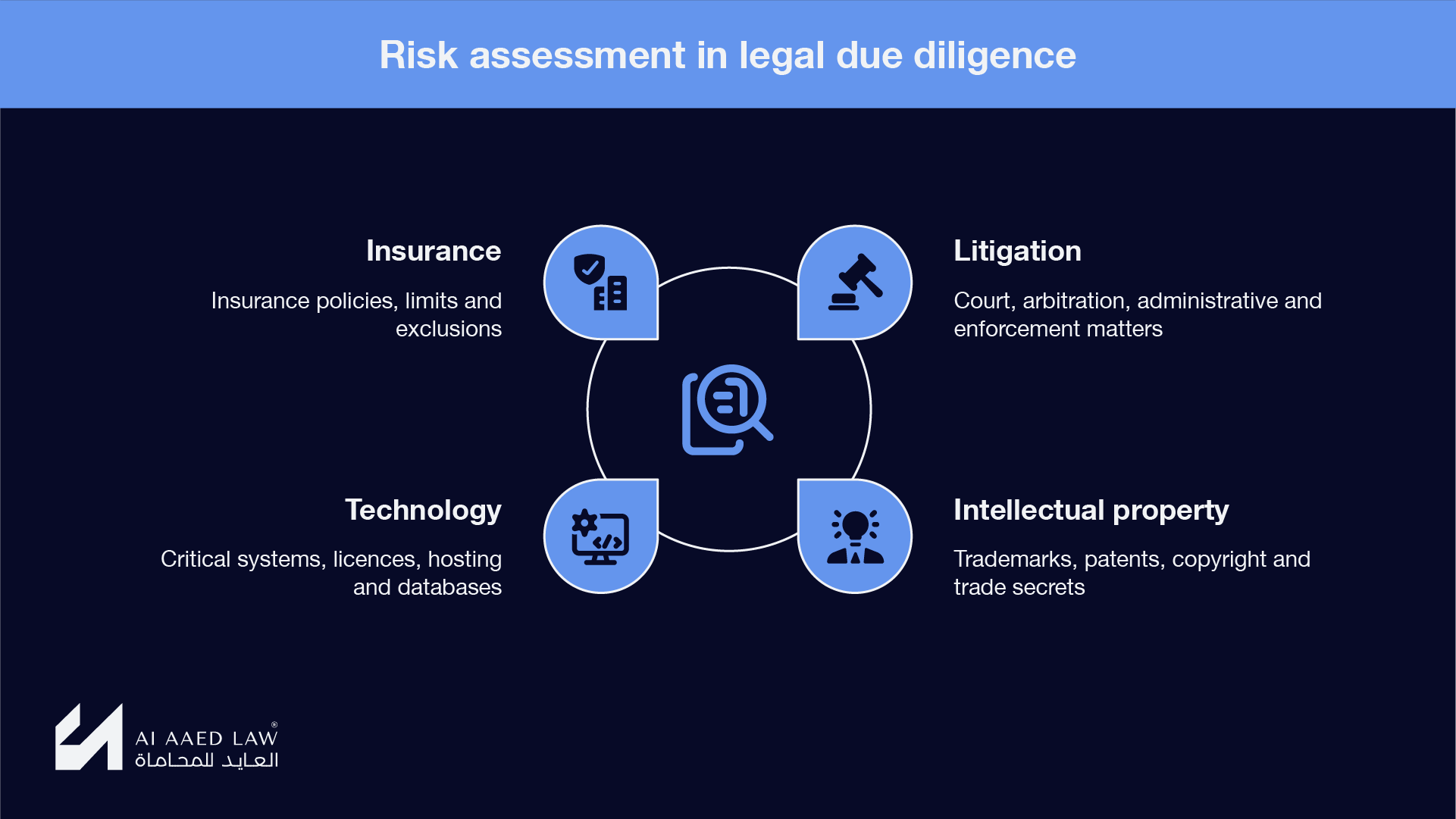
Prepare a schedule of pending, threatened and historic court, arbitration, administrative and enforcement matters. Review pleadings, awards, judgments, settlement terms, legal opinions, provisions and insurance notices. Search official records where access and case identifiers permit.
Assess not only potential payment but also injunctions, licence risk, asset attachment, reputational effect and management time. Confirm whether awards or judgments can be enforced against available assets.
Trademarks patents copyright and trade secrets
List registered and unregistered marks, patents, designs, domain names, software, copyright works, trade names and confidential know-how. Match registrants and applicants to the target and verify renewals, licences, assignments, coexistence agreements and disputes. Syrian trademark and related industrial-property rights are governed by Law No. 8 of 2007 as amended, with registration administered through the competent directorate.[7][15]
Confirm that employees, founders and contractors assigned relevant rights. A logo used for years may have limited transaction value if it is registered to a founder or was never protected.
Technology data and cybersecurity
Map critical systems, licences, hosting, domains, databases, source code, access controls, backups, incidents and outsourced providers. Identify software that is unlicensed, non-transferable or controlled by a departing shareholder.
Review how customer, employee and counterparty information is collected, shared, transferred and retained under the rules applicable to the business and any foreign group. Cyber and data findings may require technical testing and jurisdiction-specific advice beyond Syrian corporate law.
Insurance and recoverability
Review policies, limits, exclusions, deductibles, premiums, claims, notifications and continuity after a change of control. Compare insured names, locations and activities with the target's real operations.
Insurance reduces risk only if the policy responds and the insurer can perform. It should not be used to replace investigation of a known defect.
Integrity sanctions and source of funds
Ultimate ownership and control
Identify every direct and indirect owner, controller, director, authorized signatory, key agent and material beneficiary. Obtain reliable identity and corporate evidence, understand the ownership chain and investigate unexplained nominees, frequent transfers or opaque jurisdictions.
This exercise supports authority, conflict, sanctions, anti-money-laundering and reputational analysis. A percentage-only review can miss control exercised through voting, appointment, financing or contractual rights.
Anti-money-laundering and anti-bribery review
Examine the target's customers, suppliers, agents, commissions, donations, gifts, public interactions, cash practices, internal controls and investigations. Test unusual payments, round sums, third-party accounts, unsupported services and intermediaries selected by public officials or counterparties.
The transaction agreement should require accurate disclosure, lawful conduct and cooperation with necessary checks. High-risk findings may require forensic review, remediation or withdrawal, not a generic warranty.
Sanctions screening after broad relief
The cross-border position changed materially in 2025 and 2026. OFAC states that the United States no longer maintains comprehensive sanctions on Syria or blocking sanctions on the Syrian government, while list-based measures remain for designated persons and other actors. The EU lifted broad economic sanctions in May 2025 but renewed targeted measures against persons and entities linked to the former regime until 1 June 2027. The UK also removed significant restrictions while retaining designated-person and security-related measures.[10][12][13]
Accordingly, “Syria sanctions were lifted” is not an adequate diligence conclusion. Screen the target, ultimate owners, management, banks, agents, counterparties and assets under the laws applicable to the buyer, lenders, currencies, goods and transaction route-at onboarding, signing, closing and payment.
Export controls banking and payment route
U.S. export controls were relaxed in September 2025, including authorization for many EAR99 items under License Exception SPP, but controlled items, prohibited end uses and designated end users can still require licences or block supply. Other jurisdictions retain their own controlled-goods rules.[11]
Confirm product classification, origin, technology content, end user, destination, bank acceptance, currency, correspondent path and documentary requirements before promising a closing date. A legally permitted investment can still fail operationally if a bank or supplier cannot process it.
Source of funds reputation and continuing monitoring
Document the investor's funding source, financing agreements, beneficial owners and the economic purpose of the transaction. Review credible adverse information, criminal allegations, regulatory findings and unexplained wealth proportionately and lawfully.
Screening is time-sensitive. Lists, ownership and controls can change between signing and closing, and a party cleared under one regime may remain restricted under another. The documents should allocate the consequences of a new designation or rejected payment route.
Turning findings into deal terms signing and closing
Red-flag matrix and decision ownership
Each finding should state the fact, evidence, applicable rule, affected value or operation, probability, severity, proposed response, owner and deadline. Avoid reports that merely reproduce documents or label every point “high risk” without explaining the transaction effect.
The investment committee should be able to see what is unresolved at signing, what must be completed before closing and what will remain with the buyer afterwards.
Structure price escrow and holdback
A finding may support switching from shares to selected assets, excluding an entity or asset, reducing the price, using completion accounts, retaining funds, placing money in escrow or deferring consideration. The mechanism must match the risk and be workable under the payment and enforcement environment.
Price adjustment should not be used where the buyer cannot lawfully acquire the asset or where the defect prevents operation. Some matters require correction or abandonment, not discounting.
Warranties disclosure and information accuracy
Warranties allocate information and liability; they do not make an unverified fact true. They should cover title, authority, accounts, liabilities, tax, contracts, licences, assets, employees, disputes, IP, compliance, sanctions and information completeness as appropriate to the deal.
Disclosure should be specific, organized and linked to the relevant warranty. A general statement that all data-room material is disclosed may not give the buyer an intelligible understanding of the exception.
Conditions precedent and third-party consents
Use conditions precedent for matters that must be satisfied before the buyer is required to close: corporate approvals, competition or sector clearance, investment-authority action, lender release, key consent, licence correction, title registration or absence of specified adverse events.
Set evidence standards, responsibility, long-stop date, waiver rights and consequences of failure. A condition described vaguely as “all approvals” creates avoidable disagreement.
Indemnities limits and remedies
Specific indemnities can address identified tax, litigation, title, employee, environmental or compliance exposure. The agreement should define covered loss, causation, mitigation, notice, conduct of claims, recovery priority, caps, thresholds, survival and security.
Enforceability and recovery matter as much as wording. Test the seller's assets, governing law, dispute forum, interim relief, service, recognition and payment route before relying on a promise to reimburse.
Signing and closing control
Signing creates the contractual commitment; closing transfers the agreed interests and funds when conditions are met. Maintain separate signing and closing checklists showing originals, resolutions, powers, certificates, consents, releases, transfer instruments, registers, funds flow and delivery responsibility.
Do not release signatures or money until the agreed conditions and sanctions re-screening are complete. Remote or counterpart signing must comply with the required form for each Syrian and foreign document.
Post-closing filings and integration
After closing, update company and ownership records, management and signing authority, licences, investment files, tax and social records, banks, title, IP registers, insurance and important counterparties as required. The 2026 registry platform continues to evolve, so confirm the live filing channel and whether original attendance or documents remain necessary.[8][9]
Track remediation promises, employee actions, release filings, transitional services, data access and retained records. A transaction is not complete merely because the purchase price was paid.
| Finding | Appropriate response | Evidence required before closure |
|---|---|---|
| Seller cannot prove title or authority | Deal blocker or mandatory pre-closing cure | Current ownership record, valid approvals and executable transfer authority |
| Essential licence or consent missing | Condition precedent, structure change or exclusion | Written authority or counterparty approval and corrected licence record |
| Quantifiable historic liability | Price adjustment, escrow, holdback or specific indemnity | Agreed amount, security and enforceable claims procedure |
| Remediable compliance gap | Pre-closing cure or time-bound covenant | Filing receipt, policy, training, payment or authority confirmation |
| Uncertain contingent exposure | Disclosure, risk-sharing and monitoring | Defined warranty, cap, retention, reporting and control of claims |
| Sanctions, export-control or integrity concern | Enhanced review, licence analysis or withdrawal | Current screening, ownership evidence, legal authorization and accepted payment route |
A practical due diligence action plan
- Define the commercial objective, proposed structure, transaction perimeter and jurisdictions involved.
- Sign confidentiality terms and establish secure data-room, privilege, personal-data and document-retention rules.
- Complete initial identity, ultimate-owner, conflict, sanctions, adverse-information and source-of-funds screening.
- Issue a tailored request list covering corporate, contracts, licences, assets, finance, tax, labour, disputes, IP, data, insurance and integrity.
- Obtain current independent registry, title, security, IP, court and authority evidence where available.
- Reconcile the public record, constitutive documents, ownership table, accounts, licences and management representations.
- Identify essential contracts, change-of-control and assignment provisions, lender releases and third-party consents.
- Test investment, sector, competition, foreign-ownership, property, sanctions, export-control, banking and payment requirements.
- Maintain a live red-flag matrix with evidence, severity, commercial effect, recommended response, owner and deadline.
- Translate findings into structure, price, conditions, warranties, disclosures, covenants, indemnities, termination rights and security.
- Run controlled signing and closing checklists, repeat time-sensitive screening and verify every deliverable before releasing funds.
- Complete post-closing filings, releases, notifications, integration and remediation, with a dated responsibility tracker.
Legal notice
This article provides general information as of 9 September 2026. It is not legal, tax, financial, sanctions, investment or technical advice and does not create a lawyer-client relationship. Syrian laws, implementing instructions, administrative practices, forms, fees and digital services can change. Cross-border sanctions, export controls, banking requirements and designation lists are jurisdiction-specific and time-sensitive. Obtain advice on the facts, parties, sector, assets and transaction route before signing, paying or implementing any investment or acquisition.