Restructuring can help a business facing financial or operational pressure reorganize its obligations, protect viable operations, and address creditor claims before its difficulties become more serious.
In Syria, restructuring may involve changes to debt arrangements, contracts, ownership, assets, or business operations. The appropriate approach depends on the company's financial position, agreements with creditors, and available legal options.
This guide explains when restructuring may be necessary, the main approaches businesses can consider, and how the process can affect creditors, shareholders, contracts, and business continuity.
Summary of key points
| Topic | Key point |
|---|---|
| restructuring in Syria: What Does Restructuring Mean for a Business? | Restructuring is the process of reorganizing a company's financial, corporate, or operational affairs to address difficulties or create a more sustainable business structure. |
| When Should a Company Consider Restructuring? | Financial difficulty often develops gradually. |
| What Are the Main Types of Restructuring? | There is no single restructuring model that works for every business. |
| How Does Restructuring Affect Creditors? | Creditors are central to many restructuring processes because changes to debt obligations frequently require negotiation and agreement. |
| What Role Do Contracts Play in Restructuring? | Contracts can significantly affect whether a restructuring strategy is practical. |
| Restructuring, Insolvency, and Bankruptcy | Restructuring and insolvency are related but distinct. |
restructuring in Syria: What Does Restructuring Mean for a Business?
Restructuring is the process of reorganizing a company's financial, corporate, or operational affairs to address difficulties or create a more sustainable business structure.
It does not necessarily mean that a company is insolvent or preparing for bankruptcy. Businesses can restructure earlier, particularly when financial or operational problems are identified before they threaten the company's survival.
Financial and Corporate Restructuring
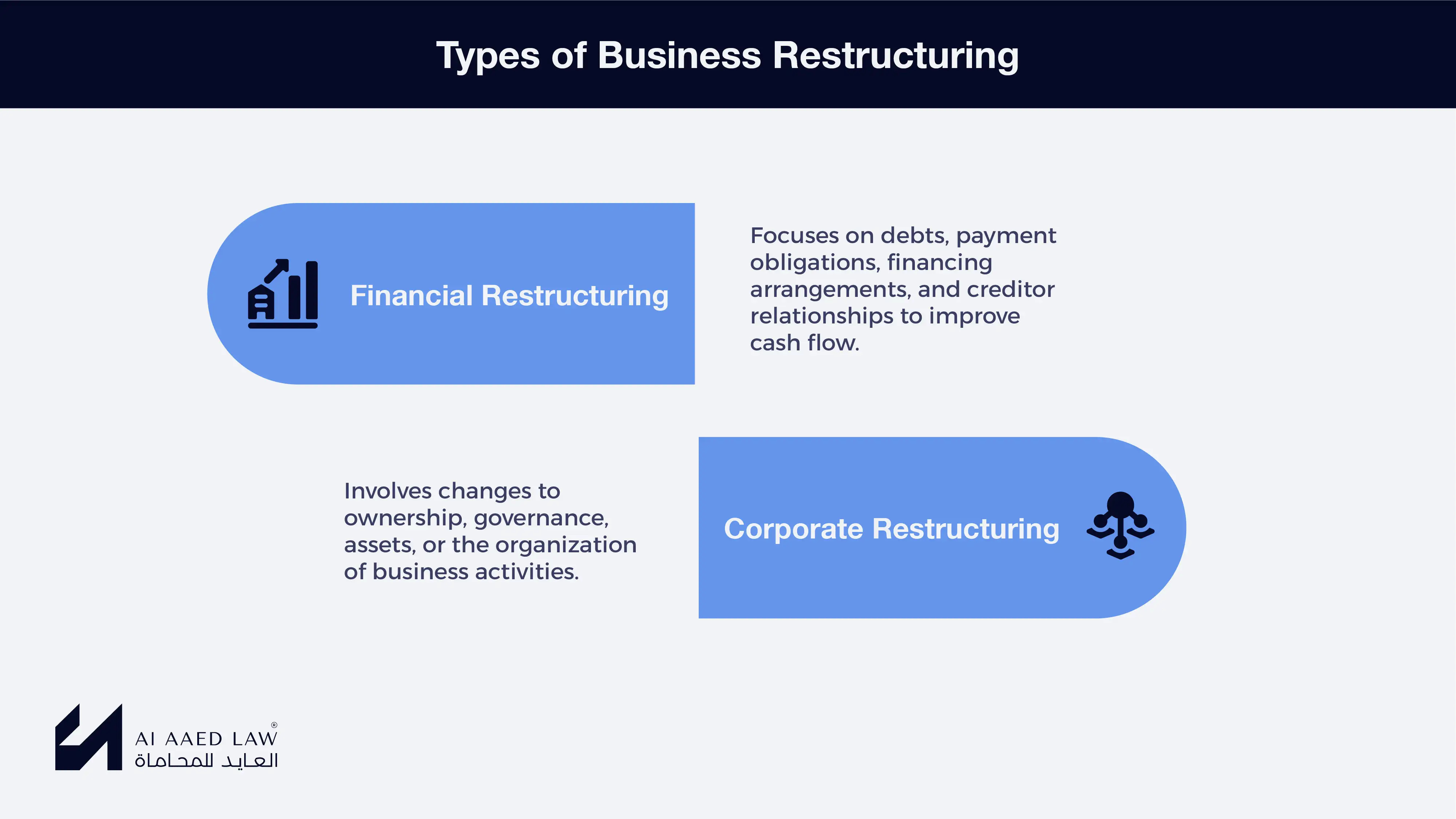
Financial restructuring focuses on debts, payment obligations, financing arrangements, and creditor relationships. It may aim to improve cash flow, extend repayment periods, or create a manageable debt structure.
Corporate restructuring can involve changes to ownership, governance, assets, or the organization of business activities.
Both can form part of a wider insolvency and restructuring strategy in Syria where a company is experiencing significant financial pressure.
When Should a Company Consider Restructuring?
Financial difficulty often develops gradually. Declining revenue, growing debt, delayed payments, or creditor pressure may indicate that a company needs to reassess its structure.
Recognizing these warning signs early can provide more time to consider legal and commercial solutions.
Financial and Operational Warning Signs
A company may need to consider restructuring where it experiences:
- Persistent cash-flow shortages
- Difficulty servicing debts
- Repeated delays in paying suppliers
- Significant operating losses
- Increasing creditor pressure
- Loss of important customers or contracts
- Unprofitable business activities
- Inefficient corporate or ownership structures
Restructuring may also become relevant following shareholder disputes, unsuccessful expansion, ownership changes, or significant changes in market conditions. These circumstances can require consideration of corporate governance alongside financial restructuring, particularly where the company was established under one of the types of companies recognized in Syrian law.
What Are the Main Types of Restructuring?
There is no single restructuring model that works for every business. The appropriate approach depends on the company's liabilities, assets, contracts, creditors, and prospects for recovery. A restructuring strategy may combine financial, operational, and corporate measures.
Debt Restructuring
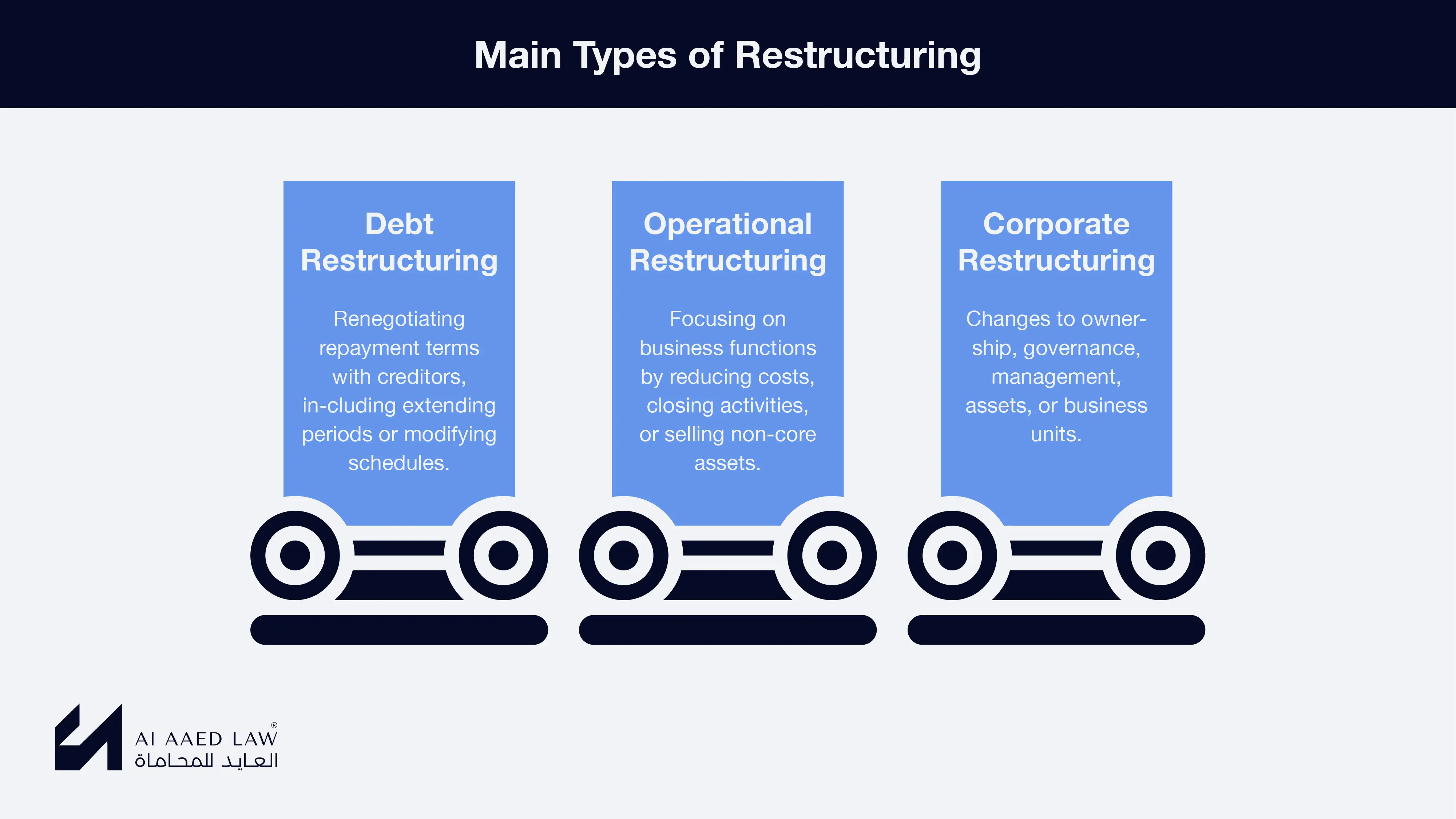
Debt restructuring involves renegotiating the terms under which a company must repay creditors.
Depending on the circumstances and creditor agreement, this may include extending repayment periods, modifying payment schedules, or otherwise revising financing arrangements.
Companies with substantial bank financing may also need to consider banking and finance law in Syria and any security provided to lenders.
Operational Restructuring
Operational restructuring focuses on how the business functions.
A company may reduce unnecessary costs, close unprofitable activities, sell non-core assets, renegotiate supplier arrangements, or concentrate resources on viable business lines.
Legal review is important where these changes affect employees, leases, licenses, or contractual commitments.
Corporate Restructuring
Corporate restructuring may involve changes to ownership, governance, management, assets, or business units. Depending on the circumstances, a company might bring in new investors, reorganize operations, transfer assets, or revise shareholder arrangements. These changes should comply with applicable corporate law in Syria and existing contractual obligations, including the terms agreed when the business was first incorporated through company formation in Syria.
How Does Restructuring Affect Creditors?
Creditors are central to many restructuring processes because changes to debt obligations frequently require negotiation and agreement. An effective restructuring must balance the company's need for financial relief with creditors' rights to recover amounts owed.
Negotiating With Creditors
Companies should enter creditor negotiations with a clear understanding of their financial position and realistic ability to meet revised obligations. Negotiations may address repayment schedules, maturity dates, security, settlements, or other terms. Accurate financial information can also help creditors determine whether restructuring offers a better outcome than enforcement, litigation, or formal insolvency proceedings.
Secured and Unsecured Creditors
The position of creditors can differ depending on the nature of the debt and whether security has been provided. Secured creditors may hold rights over specific assets, while unsecured creditors generally depend on the debtor's broader ability to meet its obligations. Companies should therefore map their liabilities and creditor rights before proposing a restructuring plan.
What Role Do Contracts Play in Restructuring?
Contracts can significantly affect whether a restructuring strategy is practical. Loan agreements, leases, supply contracts, and shareholder agreements may contain provisions triggered by financial distress, defaults, or changes in ownership.
Contractual review should therefore be part of the restructuring process.
Reviewing and Renegotiating Agreements
Businesses should identify provisions relating to payment defaults, termination, security, guarantees, changes of control, and dispute resolution.
They may also need to renegotiate financing arrangements, leases, supplier contracts, or other long-term commitments.
Any amendments should be clearly documented. Properly drafting and reviewing commercial agreements can reduce uncertainty and disputes during restructuring.
Restructuring, Insolvency, and Bankruptcy
Restructuring and insolvency are related but distinct.
Restructuring generally aims to reorganize the company's affairs and preserve viable operations. Formal insolvency or bankruptcy procedures may become relevant where financial problems can no longer be addressed through ordinary business arrangements.
When Restructuring May Prevent Insolvency
Early restructuring may allow a viable business to stabilize its finances through creditor negotiations, asset disposals, new investment, operational changes, or revised financing. Professional advice on insolvency and restructuring in Syria can help determine whether restructuring remains realistic or whether formal proceedings should be considered. Where new capital is being introduced, the protections available under Syrian investment law may also be relevant.
When Bankruptcy Becomes Relevant
Where financial difficulties cannot be resolved through restructuring, bankruptcy or other formal procedures may need to be assessed.
These proceedings can affect the debtor, creditors, shareholders, management, contracts, and company assets. Legal advice is important before taking decisions that materially affect creditor rights or the company's financial position.
How Can Companies Prepare a Restructuring Plan?
Effective restructuring begins with understanding why the company is experiencing difficulty and whether its underlying operations remain viable.
Management should review the financial, contractual, corporate, and regulatory position before deciding on specific measures.
Assess the Company's Position
A restructuring review should generally consider:
- Debts and payment obligations.
- Secured and unsecured creditors.
- Cash flow and available financing.
- Company assets.
- Major commercial contracts.
- Employee obligations.
- Pending disputes and claims.
- Shareholder and governance issues.
This assessment helps determine whether financial, operational, corporate, or combined restructuring is appropriate.
Conduct Legal Due Diligence
Financial analysis alone may overlook significant contractual or regulatory risks.
Legal due diligence in Syria can identify guarantees, security arrangements, creditor rights, contractual defaults, disputes, regulatory obligations, and restrictions affecting proposed transactions.
This information can then be incorporated into the restructuring strategy.
Protecting the Business During Restructuring
Financial difficulties do not remove a company's existing legal obligations. Management must continue monitoring contracts, employees, regulatory requirements, and creditor relationships while restructuring takes place.
Maintaining compliance can help prevent additional problems from developing during an already challenging period.
Maintain Compliance and Prepare for Disputes
Businesses should continue addressing regulatory compliance in Syria, corporate requirements, licenses, employment obligations, and other applicable rules, including anti money laundering requirements where the company operates in a regulated sector.
They should also prepare for potential disagreements. Disputes can arise over unpaid debts, enforcement of security, contract termination, shareholder rights, or company assets.
Considering commercial dispute resolution in Syria can therefore form part of restructuring risk management.
Building a Sustainable Restructuring Strategy
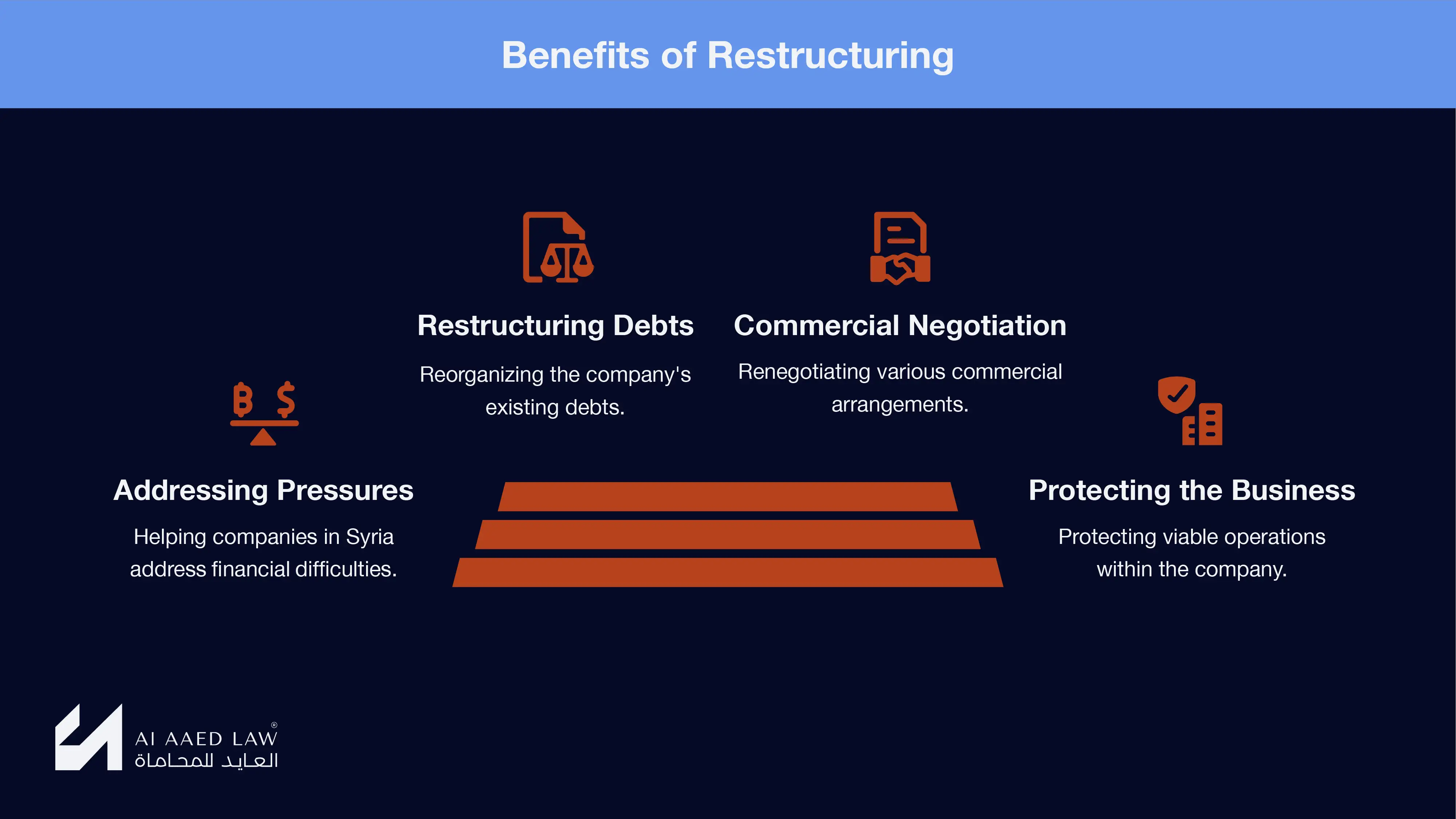
Restructuring can help businesses in Syria address financial pressure, reorganize debt, renegotiate commercial arrangements, and protect viable operations. Its effectiveness often depends on identifying problems early and understanding the rights of creditors, shareholders, and other stakeholders.
A restructuring strategy should combine financial analysis with careful review of contracts, liabilities, corporate structure, and regulatory obligations.
Companies experiencing serious financial difficulties should seek professional advice on insolvency and restructuring in Syria before taking decisions that could significantly affect creditors, assets, or business continuity.
Further Reading
- Anti Money Laundering in Syria: AML Requirements for Businesses
- LLC Formation in Syria: Key Clauses and Legal Requirements
- Partnership Agreement in Syria: A Legal Guide for Partners
- Types of Commercial Partnership Agreements
- Intellectual Property Protection Law in Syria
For tailored advice, contact our team or explore all practice areas.
This article is provided for general information only and does not constitute legal advice. For advice on a specific matter, contact AL AAED Law Firm.
Official source: Syrian Ministry of Justice